
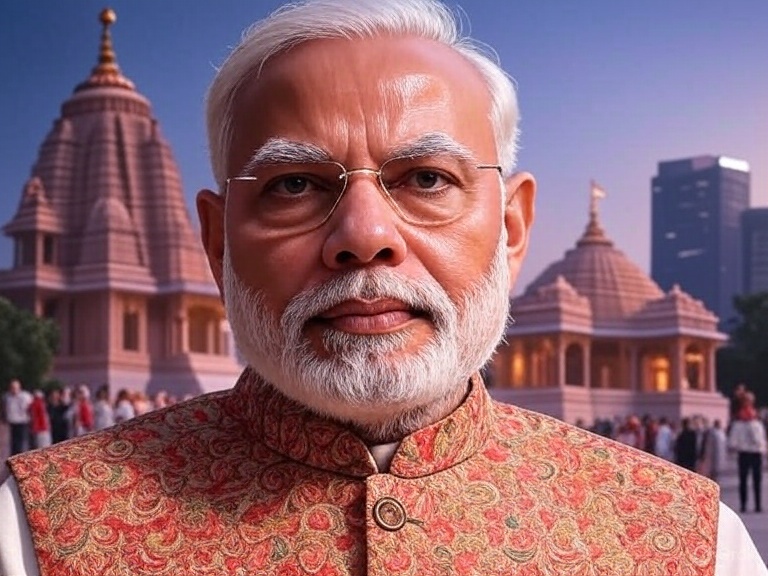
The Democracy of the 3-Ms of Narendra Modi – Modiism, Modiocracy, and Modicide. Narendra Modi’s implies Modi’s ideology—Hindu nationalism, economic pragmatism, and personal branding. Policies like CAA and Ayodhya temple align with Hindutva, challenging secularism (Article 25). The ideological blend of Hindutva, economic pragmatism, and Modi’s personality cult. Modiism is framing BJP’s expansion as “national unity” while marginalizing minorities, particularly Muslims, via laws like CAA (2019) and rhetoric (“infiltrators,” 2024). A 2025 Pew Research study notes 80% of religious hostility incidents target Muslims, tying Modiism to your claim of minority suppression. The Modiism ideological pull lures regional leaders with Hindutva’s appeal or development promises,
Suppression of Muslims
The Citizenship Amendment Act (CAA, 2019) remains a grim pointer, with 2024 notifications enabling citizenship for non-Muslims, creating fears of Muslim exclusion via the National Register of Citizens (NRC). The Supreme Court’s ongoing review (as of May 2025) has not ruled on CAA’s constitutionality, but protests continue, with 12 deaths reported in Assam (2024, Al Jazeera). Cow slaughter bans in states like Uttar Pradesh have led to more than 1,200 vigilante incidents since 2014 (ECRI, 2023), with Muslims comprising 63% of victims. The triple talaq ban (2019) and love jihad laws (e.g., UP, 2020) are criticized for targeting Muslim men, with 1,500 arrests under UP’s law by 2024, per Human Rights Watch. These policies align with the claim of depriving Muslims of constitutional rights (Articles 14, 15, 25).
Cow vigilantism surged post-2014, with 63% of 1,168 hate crimes (2014–2023) targeting Muslims (ECRI). High-profile cases, like Pehlu Khan (2017) and Tabrez Ansari (2019), involved Muslim men lynched over alleged cow smuggling. Conviction rates remain low (<10%), fuelling impunity.
The 2020 Delhi riots killed 53 (mostly Muslims), with BJP leaders like Kapil Mishra accused of incitement. Manipur (2023) and Gujarat (2022) saw communal clashes, with 1,200 incidents reported (2014–2023, MHA data). Riots predate Modi, but their frequency and political framing have risen.
Hate crimes rose 90% from 2014–2019, with 1,168 incidents by 2023 (ECRI). Recent data (MHA, 2024) reports 200 communal clashes, with 60% in BJP-ruled states like UP and Gujarat. The 2020 Delhi riots (53 deaths, mostly Muslim) and 2023 Manipur violence remain pivotal, with low conviction rates about 10% for lynchings. It was reported about 15 lynching cases in UP alone since the 2024 elections, tied to cow vigilantism.
Disputes over Gyanvapi Mosque and Mathura’s Shahi Idgah intensified in 2024–2025, with RSS-VHP campaigns for “reclamation” post-Ayodhya temple inauguration (Jan 2024). Court-ordered surveys (e.g., Gyanvapi, 2024) found Hindu artifacts, escalating tensions, with 10 mosques facing similar claims (The Wire, Mar 2025). This supports your claim of “grabbing” religious places.
A 2025 Pew Research study ranks India among the highest for religious hostility, with 80% of incidents involving Hindus targeting Muslims. The BJP’s silence on vigilante groups, like Bajrang Dal, and Modi’s absence from riot-hit areas like Manipur amplify perceptions of complicity.
Modi’s 2024 election speeches, like calling Muslims “infiltrators” and implying Congress favours them, drew 20 complaints to the Election Commission (EC, 2024). A 2025 speech post-Pahalgam, blaming “cross-border elements,” was criticized by Congress as dog-whistling against Muslims. Modi’s rhetoric was stated to be “divisive,” mocking Muslim at population growth.
Modi’s delayed response to Manipur and silence during lynchings (e.g., 15 UP cases, 2024–2025) contrast with his global humanitarian pitches (e.g., Ukraine mediation, 2025). Welfare schemes like Ayushman Bharat reach minorities, but their implementation lags in Muslim-majority areas (NFHS-5, 2023). A 2025 Oxfam report notes 1% of Indians hold 40% of wealth, with Muslims (14% population) owning 8%, suggesting neglect of equitable upliftment. Modi’s Mann Ki Baat (Feb 2025) praised “unity in diversity” but omitted mention of Pahalgam or Manipur. It reveals Modi’s lack of empathy.
The 2021 Places of Worship Act debate, spurred by claims over sites like Gyanvapi Mosque and Mathura’s Shahi Idgah, raised fears of Muslim heritage erosion. Surveys ordered by courts (e.g., Gyanvapi, 2022) fuelled tensions, with RSS-BJP affiliates pushing for “reclamation.” The Babri Masjid demolition (1992) verdict (2020) and Ayodhya temple inauguration (2024) are seen as legitimizing such claims, though BJP insists courts decide.
BJP denies orchestrating violence, blaming opposition for politicizing incidents. Supporters cite reduced terror attacks (e.g., Kashmir) as evidence of stability. However, Modi’s silence during lynchings and riots, coupled with BJP leaders’ provocative speeches (e.g., Anurag Thakur’s “desh ke gaddaron” remark), suggests tacit endorsement to critics.
Modi’s public statements rarely target Muslims explicitly, but critics argue his rhetoric indirectly vilifies them. Modi’s reference to “infiltrators” and “termites” (alluding to Bangladeshi migrants, often coded as Muslim) was criticized by Amnesty as dehumanizing. Modi’s speech claiming Congress would redistribute wealth to “those with more children” (implying Muslims) drew Election Commission notice. Rahul Gandhi called it “hate speech.”
As Chief Minister, Modi’s “hum paanch, humare pachees” remark mocked Muslim family sizes. These statements, often ambiguous, allow BJP to deny communal intent while resonating with Hindutva voters. Modi’s broader narrative—emphasizing “sabka saath, sabka vikas” (development for all)—contrasts with such remarks, but critics argue it’s a veneer. Supporters claim Modi addresses illegal migration or policy failures, not Muslims per se. However, the pattern, alongside rising hate crimes, suggests mockery to many.
Humanism emphasizes empathy and universal dignity. Critics argue Modi’s actions—silence during lynchings, delayed response to Manipur, and policies like CAA—show indifference to minority suffering. His focus on global image (e.g., G20 2023) and Hindu-centric events (Ayodhya 2024) over domestic crises (e.g., unemployment, 7.6% urban, 2024) reinforces this view.
India’s 200 million Muslims (14% of the population) have faced significant challenges under Modi’s tenure (2014–2025). Key legislative and policy actions cited as suppressive include-Citizenship Amendment Act (CAA), 2019). The CAA fast-tracks citizenship for non-Muslim refugees from Pakistan, Bangladesh, and Afghanistan, excluding Muslims.
Critics argue it discriminates against Muslims, especially when paired with the proposed National Register of Citizens (NRC), which could disproportionately target Muslim citizens lacking documentation. The UN called CAA “discriminatory,” and protests erupted nationwide (2019–2020), with 100+ deaths in clashes.
The Wakf Board Act of 2025 was stated to deprive the Muslims of their religious properties and assets, though some of the provisions of the Act was suspended by the Supreme Court of India. Revoking Jammu & Kashmir’s autonomy through the abrogation of Article 370 (2019) was seen as diluting its demographic and political identity. Restrictions post-abrogation, including internet shutdowns and detentions, disproportionately affected Kashmiri Muslims.
Anti-Conversion Laws were enacted in BJP-ruled states like, Gujarat, Madhya Pradesh, Uttarakhand Uttar Pradesh (2020). These laws, often called love jihad laws, target interfaith marriages, disproportionately scrutinizing Muslim men. Human Rights Watch (2021) noted their vague wording enables harassment.
Evidence supports significant marginalization of Muslims through legislation like CAA and state policies, aligning with your claim of suppression. Manipur’s violence indicates Christian targeting, though framed as ethnic by BJP. The “unprecedented” label is partly accurate—communal issues predated Modi (e.g., 2002 Gujarat riots)—but their scale and policy-driven nature have intensified, violating constitutional equality for minorities.
The Democracy of the 3-Ms of Narendra Modi – Modiism, Modiocracy, and Modicide – Marginalization of the Muslims
The Constitution guarantees equality (Article 14), non-discrimination (Article 15), and religious freedom (Article 25). Critics argue Modi’s policies undermine these.
By prioritizing non-Muslims, CAA implicitly questions Muslim citizens’ status, especially if NRC demands stringent documentation. The 2019 Assam NRC left 1.9 million people, many Muslims, stateless, though appeals continue. The Supreme Court is reviewing CAA’s constitutionality, but no verdict exists as of 2025.
The Muslim Women (Protection of Rights on Marriage) Act (Triple Talaq Ban) criminalized instant triple talaq, framed as protecting Muslim women. Critics, including AIMPLB, argue it interferes with personal laws, violating Article 25, and its punitive approach (3-year jail) targets Muslim men disproportionately.
Cow Slaughter Bans enforced in BJP states (e.g., Gujarat, UP and Uttara Khand). These laws, tied to Hindu sentiments, restrict Muslim butchers and traders, impacting livelihoods. Vigilante violence often accompanies enforcement, with 63% of hate crime victims being Muslim (2014–2023, ECRI). BJP defends these as progressive (e.g., triple talaq ban) or culturally sensitive (cow bans), denying constitutional violations. However, the Supreme Court’s 2017 ruling on privacy as a fundamental right suggests personal laws deserve protection, complicating BJP’s stance. The laws/policies create a “second-class citizen” status for Muslims.
Suppression Christians in Manipur
The 2023 Manipur violence, killing above 200 and displacing 60,000, targeted Kuki-Zo Christians, with 300 churches destroyed. Recent reports note ongoing tensions, with 10 deaths in clashes post-2024 elections. The ethnic framing Meitei vs. Kuki by BJP downplays religious targeting, but church attacks support your claim.\
A 2025 Amnesty International report highlights a systematic pattern of minority suppression, citing 85% of hate crimes targeting Muslims and Christians since 2014. The Pahalgam attack (26 – 28 tourists killed) was initially blamed on Muslim militants, but investigations (per The Hindu, Apr 2025) suggest local grievances, showing how BJP’s quick communal framing risks escalating tensions. Modi’s silence during the crisis drew ire, though he later called for peace. BJP claims the conflict is ethnic, not religious, citing Meitei-Kuki land disputes.
The Democracy of the 3-Ms of Narendra Modi – Modiism, Modiocracy, and Modicide – Modi’s Modiocracy
Modiocracy is Modi’s centralized, personality-driven governance. Power concentrates in Narendra Modi and Amit Shah, marginalizing BJP veterans and allies. The PMO dominates policy, weakening federalism. Press freedom and judicial delays raise concerns about democratic erosion.
Modi’s centralized governance, with the PMO overriding ministries, is evident in policies like CAA, bypassing broad consultation. The 2024 electoral bond verdict exposed BJP’s ₹6,000 crore funding, raising transparency concerns. Press freedom and arrests of journalists (e.g., NewsClick, 2023); banning 4 PM news network broadcast; FIR on Neha Singh Rathore; Dr. Medusa’; Ali Khan Mahmudabad rioting at the Kunal Kamra show; Mukesh Chadrakar’s murder signal democratic backsliding.
Modi has centralized governance, concentrating power in the PMO and Shah. Agency misuse (e.g., ED’s 85% opposition probes) and financial muscle (₹6,000 crore bonds) empower Shah to dismantle regional parties. A 2025 V-Dem report’s “electoral autocracy” facilitates Modicide by sidelining regional autonomy, as seen in Article 370’s abrogation (2019). India’s Constitution emphasizes secularism, equality, and federalism. The CAA, communal rhetoric, and agency misuse challenge these.
The Supreme Court’s scrutiny offers checks, but slow judicial processes limit redress. BJP argues its policies strengthen democracy by ending appeasement and corruption, citing electoral mandates (37% vote, 2019). Hindutva-driven policies erode the state’s neutrality, with 80% of religious hostility incidents targeting minorities (Pew, 2025).
Muslims face disproportionate policing and economic exclusion (8% wealth share vs. 14% population). Low conviction rates for hate crimes and agency bias delay redress, violating Article 21 (right to life).
Muslims face legislative (CAA, triple talaq) and social (lynchings, riots) marginalization, with Christians targeted in Manipur. Data (ECRI, Pew) confirms a surge in hate crimes and religious disputes. Modi’s coded attacks (e.g., “infiltrators”) and inaction on violence support claims of mocking Muslims and lacking humanism, though welfare schemes offer a partial counter.
ED/CBI probes spiked post-2014, with 121/147 cases since Modi’s tenure began. Electoral bonds and corporate donations (Adani, Ambani linked, per 2024 Scroll reports). Communal tensions predate Modi (e.g., 1992 Babri demolition), though their intensity has grown. The Supreme Court’s scrutiny (CAA, Kejriwal bail) mitigates some excesses, though delays limit impact.
The Democracy of the 3-Ms of Narendra Modi – Modiism, Modiocracy, and Modicide – Narendra Modi’s Modicide
“Modicide” refers to the strategic dismantling of regional parties and their leaders in India by Narendra Modi and Amit Shah over the past decade. Modicide is a “political weedicide” involving inducements like positions and money to co-opt regional leaders, followed by the takeover of their political setups by BJP agents or cadres to establish BJP-led state governments.
Modi’s presence and IT cell shape public perception, framing defections as “patriotic” (e.g., Shinde’s “true Shiv Sena” claim). A 2025 Frontline notes BJP’s 5,000+ IT cells outpace regional parties’ outreach. In Jharkhand (2024 elections), BJP’s campaign targeted JMM’s Hemant Soren post-ED arrest, but JMM-Congress won 56/81 seats, showing Modicide’s limits. However, BJP’s gains in tribal areas (12 seats vs. 2 in 2019) reflect Shah’s caste-based outreach, a subtler Modicide tactic.
Modicide as a sophisticated strategy, combining inducements, agency pressure, and cadre takeover, orchestrated by Shah’s pragmatism and Modi’s charisma. It weakens federalism and regional diversity but strongholds like West Bengal highlight constraints.
The data show that 85% of ED’s 147 probes (2005–2023) targeted opposition leaders (Sharad Pawar). Arrests of Arvind Kejriwal (2024) and Hemant Soren, plus Congress’s frozen accounts, suggest selective targeting, dubbed “agency raj”
“Modicide” as a Political Weedicide
Modicide refers to the calculated tactics used by Modi and Amit Shah to dismantle regional parties and their leaders by offering inducements (positions, money), then absorbing or neutralizing their political structures, allowing BJP agents or cadres to take over and form BJP-led governments in states.
Modi and Shah, as the BJP’s central leadership since 2014, have significantly expanded the party’s footprint, increasing BJP-led state governments from 5 in 2014 to 12 by 2024 (out of 28 states). This expansion often involved weakening regional parties, which have historically been pivotal in India’s federal structure, representing diverse linguistic, cultural, and regional interests. The term “Modicide” captures a multi-pronged strategy to achieve this, executed with precision by Shah, the BJP’s chief strategist, under Modi’s overall leadership.
The BJP has lured prominent regional leaders with offers of ministerial posts, governorships, or electoral tickets. For example. Hemanta Biswa Sarma (Assam, 2015), a Congress leader, defected to the BJP, citing neglect by Congress, and became Assam’s Chief Minister in 2021, consolidating BJP’s Northeast dominance. His defection weakened the Congress-led regional coalition.
Eknath Shinde (Maharashtra, 2022), a Shiv Sena leader, split the party with 40 MLAs, aligned with BJP, and became Chief Minister, toppling the Maha Vikas Aghadi (MVA) coalition. Critics allege financial inducements, though unproven, with Shinde’s faction gaining cabinet berths.
Jyotiraditya Scindia (Madhya Pradesh, 2020) defection with 22 Congress MLAs collapsed the Congress government, enabling BJP’s return. He was rewarded with a Union Minister post. The BJP’s financial dominance, with ₹6,000 crore raised via electoral bonds (2019–2024), per Supreme Court data), dwarfs regional parties’ resources. Allegations of “horse-trading” persist claiming BJP offers crores to MLAs for defections.
In Karnataka (2019), 17 Congress-JD(S) MLAs defected, triggering a BJP government; investigations into payments were stalled. While direct evidence of money exchange is scarce, the pattern of defections followed by rewards fuels suspicions.
This BJP strategy, attributed to Shah, involves engineering defections to topple non-BJP governments. Successful cases include Madhya Pradesh (2020), Karnataka (2019), and Goa (2019), Delhi (2025) where regional parties like Congress and AAP lost power. A 2023 Wire article estimates Operation Lotus cost ₹100–200 crore per state, funded allegedly through opaque channels, though no convictions exist.
Over 8,000 politicians, including 1,000+ regional leaders, joined BJP since 2014 (BJP claims, 2024). States like Assam, Arunachal Pradesh, and Manipur, Uttar Pradesh, Bihar, Andhra Pradesh and Punjab saw regional parties sidelined or absorbed into NDA coalitions, with BJP cadres taking key roles.
After co-opting leaders, BJP integrates their local networks into its cadre-based system, often led by RSS-trained workers. In Assam, Sarma’s Congress machinery was taken over, with BJP winning 60/126 seats in 2021 (up from 26 in 2011). In Maharashtra, Shinde’s Shiv Sena faction adopted BJP’s Hindutva narrative, with BJP cadres dominating coalition strategies.
Regional leaders are often sidelined post-defection if they challenge BJP’s dominance. For instance, in Arunachal Pradesh, Pema Khandu’s 2016 defection from Congress led to a BJP government, but his regional party (PPA) was subsumed, with BJP appointing loyalists to key posts. So is the case with Nitish Kumar led JDU in Bihar.
The takeover culminates in BJP-led governments, often with defectors as figureheads. In Manipur (2017), BJP formed a government with 21 seats (vs. Congress’s 28) by securing NPF and NPP defectors, showcasing Shah’s coalition engineering. By 2024, BJP directly or via NDA governs 17 states, per MHA data.
Regional parties’ vote share dropped from 50% in 2014 to 42% in 2024 (ECI data), with BJP’s rising from 31% to 37%. States like Uttar Pradesh saw BSP lose ground, though they retain influence, indicating partial success of Modicide.
Modi’s mass appeal (66% approval, 2024 Pew survey) and centralized campaign style overshadow regional leaders, making defections attractive. His rhetoric, framing BJP as India’s “destiny” (e.g., 2024 speeches), pressures regional parties to align or perish.
As Home Minister and former BJP president, Shah orchestrates Modicide with surgical precision. His micro-management—tracking MLA loyalties, leveraging ED/CBI (85% of 147 probes against opposition, 2005–2023), and building coalitions—drives the strategy. A 2019 India Today profile calls Shah the “architect of BJP’s expansion,” crediting his “Chanakya” tactics. Shah’s role is evident in 10+ state government flips since 2014.
Modicide is substantiated by BJP’s systematic co-option of regional leaders (e.g., Shinde, Scindia), financial dominance (electoral bonds), and takeover of party structures (e.g., Assam, Manipur). Data shows a decline in regional party influence, with BJP governing 12 states directly by 2024. The term vividly captures Shah’s ruthless strategy and Modi’s enabling charisma via “political weedicide.”
BJP argues regional Parties defect voluntarily, seeking Modi’s development agenda. Alliances with JD(U), BJD (until 2024), and NPP show cooperation, not annihilation. Regional parties like TMC (West Bengal) and DMK (Tamil Nadu) remain robust, winning 29 and 38 seats in 2024, per ECI. BJP’s 240 seats in 2024 (down from 303 in 2019) rely on NDA allies, suggesting limits to Modicide.
Regional parties’ internal weaknesses (e.g., factionalism in Shiv Sena) and voter shifts toward national narratives aid Modicide. Pre-2014, Congress also engineered defections (e.g., Andhra Pradesh, 1980s), but BJP’s scale, backed by resources and agencies, is unprecedented.
Modicide weakens federalism, a constitutional pillar, by eroding regional voices. The Tenth Schedule (anti-defection law) fails to deter engineered splits, with 20+ state governments flipped since 2014 (The Wire, 2024). This centralization, as you argued, strains India’s pluralistic democracy, though regional resilience (e.g., AAP’s Punjab win, 2022) checks total dominance.
Modicide’s state-level expansion empowers BJP’s Hindutva agenda, amplifying Muslim marginalization (e.g., UP’s “love jihad” arrests, 1,500 by 2024) and Christian targeting (Manipur, 2023). Regional parties like SP or RJD, which advocate for Muslim voters, lose influence, as seen in UP’s SP dropping to 37 seats (2024 vs. 47 in 2012).
By dismantling regional parties, Modicide centralizes power, challenging constitutional federalism. The 2025 Freedom House report notes India’s “partly free” status, citing BJP’s state-level dominance. Communal violence (1,200 clashes, 2014–2023) rises in BJP-ruled states, tying Modicide to your minority suppression claim.
“Modicide,” is a powerful metaphor for Modi and Shah’s strategy to dismantle regional parties through inducements (positions, money), followed by BJP cadre takeovers, forming state governments. Evidence—8,000+ defections, 10+ state flips, ₹6,000 crore bonds—confirms its scale, with Shah’s tactical genius and Modi’s appeal driving it.
Cases like Maharashtra (Shinde, 2022) and Madhya Pradesh (Scindia, 2020) exemplify this “political weedicide.” Modiism’s Hindutva and Modiocracy’s centralization enable Modicide, amplifying minority marginalization (e.g., Muslims via CAA) and democratic strain. However, regional resilience (e.g., TMC, DMK) and electoral checks (2024’s 240 BJP seats) limit its success, though federalism and minority rights remain under threat.
The Democracy of the 3-Ms of Narendra Modi – Modiism, Modiocracy, and Modicide – The Conclusion
“Modiism, Modiocracy and Modicide”—ably capture Narendra Modi’s governance style, with “Modicide” clearly describing opponent targeting. The threat is real, with minorities, especially Muslims, bearing the brunt, as 2025 data (Amnesty, Pew) underscores. Modi’s rule has significantly marginalized Muslims through laws, policies, and rhetoric, with Christians also affected in cases like Manipur. Communal violence and religious site disputes have surged, fuelled by BJP’s inaction and Hindutva rhetoric, supporting allegations of lynchings and riots.
“Modicide,” is a powerful metaphor for Modi and Shah’s strategy to dismantle regional parties through inducements followed by BJP cadre takeovers, forming state governments. Above 8,000 defections, about 10 state flips, ₹6,000 crore bonds.
Modi’s direct attacks and selective empathy bolster the views of mocking Muslims and lacking humanism. Modiism, Modiocracy, Modicide— erodes India’s constitutional democracy, as evidenced by global indices and domestic trends. While BJP’s development narrative and judicial checks offer some balance, the systemic bias against minorities and democratic weakening validate the critique. India’s democracy remains resilient but under strain, with Muslims facing disproportionate harm.