
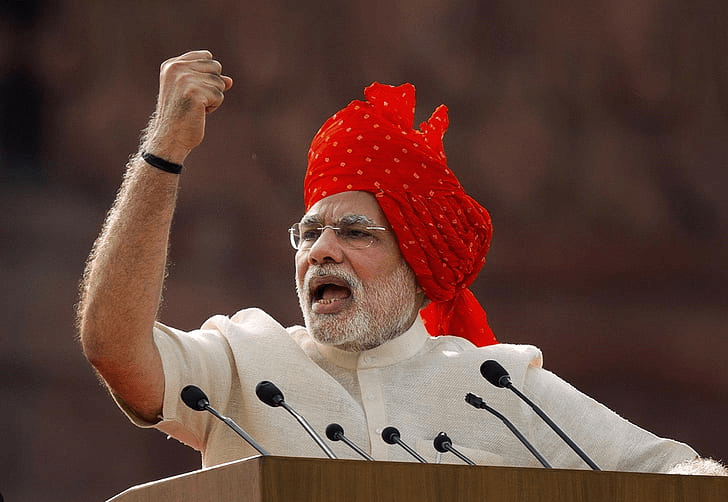

A Silent Prime Minister- Narendra Modi is one of the most silent Prime Ministers that India has ever seen. Modi famously dubbed Dr. Manmohan Singh as ‘Man Maun Singh,’ a nickname given to him for his tendency not to respond to allegations made by opposition parties, particularly his critics. Dr. Singh, a distinguished economist rather than a career politician, remained unfazed by political drama and preferred to let his party handle such matters.
He believed that if an issue required government response or intervention, he would address it. Dr. Singh was the epitome of a statesman-like Prime Minister that India had ever witnessed, serving two consecutive terms from 2003 to 2013. Narendra Modi succeeded him in 2014, and the two leaders could not be more different in terms of their personalities.

A Silent Prime Minister- Narendra Modi had been a vocal critic of Dr. Singh throughout his tenure as Prime Minister, especially after he became the BJP’s nominee for the same role. However, when Modi assumed office, he showed a more subdued and respectful attitude towards Dr. Singh.
Modi’s Shift to Silence
On February 6, 2013, while addressing students at Delhi’s Shri Ram College of Commerce, Modi discussed Gujarat’s development model. He emphasized the need for swift decision-making and enhancing the skills of the youth to accelerate economic growth. He also mentioned how professionals had transitioned from being perceived as snake-charmers to becoming a nation of mouse-charmers, a shift in mindset that he appeared to view negatively. Over the course of his ten years in power, Modi failed to deliver the anticipated economic growth, leading to his silence on the matter.
At one point, Modi criticized Prime Minister Manmohan Singh, for being a silent Prime Minister, for his handling of a dialogue with a Pakistani delegation regarding the Sir Creek issue. He called on the Prime Minister to assure the nation that not an inch of land in Sir Creek would be ceded to Pakistan. However, when it came to addressing China’s encroachments on Indian territory, Modi chose to remain silent. The Sir Creek issue pertains to a water dispute between India and Pakistan and is located in the Rann of Kutch, Gujarat, India.
In 2013, Narendra Modi praised the BBC, considering it more credible than India’s state-run broadcasters Doordarshan and Akashvani. Yet, when the BBC released a documentary on the 2002 Gujarat communal riots, which allegedly claimed the lives of a thousand Muslims, Modi maintained his silence. His actions spoke louder than his words.
A Silent Prime Minister – Narendra Modi – Best examples quoted – Hindenburg Report –
A Silent Prime Minister Narendra Modi- best examples quoted. In January 2023, Hindenburg Research unveiled damning evidence of stock manipulation and accounting fraud within the Adani Group. These revelations led to a staggering 150 crore loss in the group’s corporate value. Within just one month of the report’s publication, Adani’s ranking plummeted from the third-richest person in the world to the 30th.
The Opposition called for a debate, and the Congress demanded a Joint Parliamentary Committee (JPC) investigation into the meteoric rise of Adani and the Hindenburg report. However, the government did not agree to a JPC and maintained that it had no direct involvement with Adani’s firms. Nevertheless, the report wreaked havoc on the stock market and tarnished the image of Prime Minister Modi. The Supreme Court of India is overseeing an investigation into the matter
A Silent Prime Minister – Narendra Modi- best examples quoted -OCCRP-
A Silent Prime Minister – Narendra Modi – best examples quoted. The Organised Crime and Corruption Reporting Project (OCCRP) alleged that Gautam Adani’s family funnelled millions of dollars into their own companies through Mauritius-based funds. Additionally, the OCCRP accused two Adani associates, Chang Chung-Ling and Nasser Ali Shaban Ahli, of investing substantial sums in Adani Group’s company shares since 2013.
A Silent Prime Minister – Narendra Modi- best examples quoted- Assault of a School Student

A Silent Prime Minister – Narendra Modi – best examples quoted. In Uttar Pradesh, a school teacher named Tripta Tyagi at Neha Public School in Muzaffarnagar’s Khubbapur village instructed Class II students to slap a Muslim boy. A video of the incident went viral, and the teacher also made inflammatory communal comments. A case was registered against the school and the teacher under non-cognizable sections 323 and 504.
Suicide by a UPSRTC Bus Conductor

Mohit Yadav, a conductor at the Bareilly depot of UPSRTC, allegedly took his own life due to mental and financial stress. Earlier this year, Mohit had been suspended for reportedly allowing two Muslim passengers to stop a Delhi-bound bus for prayers. He was the eldest and sole breadwinner of his family. Modi did not express his views and remained silent on these distressing incidents.
Uturn on Adhaar
In 2013, Narendra Modi vocally opposed the UPA’s Aadhaar scheme. However, during his years in power, he has come to rely on Aadhaar for all his schemes and has refrained from criticizing it.
A Silent Prime Minister – Narendra Modi- best examples quoted – GST
A Silent Prime Minister- Narendra Modi- best examples quoted. Narendra Modi criticized the Congress for opting to implement the Goods and Services Tax (GST) during the discussion on the motion of thanks to the President of India in Parliament. He affirmed that during his tenure as the Chief Minister of Gujarat, he had identified and addressed issues affecting the GST implementation, and he continued to resolve them when he assumed the role of Prime Minister of the nation. This highlights what some perceive as a double standard in Modi’s approach.
A Silent Prime Minister – Narendra Modi- best examples quoted. Modi’s bizarre comments on Indians on his foreign sojourn
A Silent Prime Minister – Narendra Modi- best examples quoted. During his visit to Shanghai, China, Modi made a notable statement. One year prior, Indians living abroad had celebrated their victory in the 2014 Indian elections, expressing relief that the challenging days were behind them. They had transitioned from feeling ashamed to feel proud of their Indian identity.
In South Korea, Modi commented that there was a time when some Indians might have questioned their fate, wondering if this was truly their country, if this government represented them, and if these were their fellow citizens. His remarks stirred controversy and were viewed as inappropriate.
During a visit to Toronto, Canada, Modi asserted that those who had created problems had departed, and he was committed to cleaning up the mess.
In London in 2018, he commented on Indian doctors’ foreign trips, suggesting that they attended pharmaceutical company-sponsored conferences in places like Singapore or Dubai not solely for the sake of patient care but because pharmaceutical companies required their presence.
Modi’s team refrained from responding to his outspoken remarks and chose to remain silent.
Modi’s Response to His Own Comments

Modi defended his statements by emphasizing the need to shift from vote bank politics to prioritize development as the ultimate solution to all problems. He believed that the pervasive influence of vote bank politics had detrimentally impacted the entire nation, and what was truly needed was a relentless focus on development. In his view, substantial development would pave the way for significant improvements in the nation. Critics argue that Modi’s policies in India contradict this sentiment.
In addition, Modi once simplified the concept of secularism as always putting India’s interests first. He believed that by safeguarding India’s interests, the welfare of every Indian citizen would naturally be addressed. However, his critics contend that his actions do not consistently reflect this ideal.
While Modi has offered philosophical justifications for his statements, he often refrains from responding to criticisms, choosing instead to maintain silence.
Drawing the attention of those Congress colleagues who were accusing his government of uncontrolled expenditure, the Prime Minister wanted to inquire whether it was indeed true that over the past three years, an astounding sum of 1,880 crore rupees had been allocated from the public exchequer for the foreign travels of Sonia Gandhi, the President of the Congress Party. This staggering figure surpassed the combined annual budgets of Bhavnagar, Jamnagar, Junagadh, and Rajkot Municipal Corporations, underscoring the immense financial resources expended solely on Sonia Gandhi’s foreign trips and luxurious accommodations.
In a statement delivered by the then Minister of State for External Affairs, V.K. Singh, in the Rajya Sabha on July 19, 2018, it was revealed that a substantial amount of 1,484 crore rupees had been spent on Prime Minister Modi’s foreign visits between June 15, 2014, and June 10, 2018. Despite this revelation, Prime Minister Modi remained tight-lipped on the matter.
Upon assuming the position of President of the BJP, Modi had articulated his earlier stance, stating that prior to becoming Chief Minister, he had never aspired to hold such high office. His fundamental philosophy cantered on a desire to effect positive change rather than seeking personal accolades or positions. On the contrary, he reiterated this commitment during his address from the Red Fort on August 15, 2023, when he declared his intention to return as Prime Minister for a third term to serve the nation. The Prime Minister was asked to reflect on his earlier statement about his disinterest in personal ambitions and his commitment to serving the people of the country.
Modi’s Response on Gujarat Riots 2002
Following the 2002 Gujarat violence, Modi infamously referred to relief camps for displaced Muslims as child-producing centres. In the same speech, he made a derisive remark, hum paanch, humare pachees (we five, us twenty-five), insinuating that a Muslim family consisted of a man, four wives, and twenty-five children, sarcastically alluding to a perceived rapid growth in the Muslim population. However, official statistics showed that Gujarat’s Muslim population had only marginally increased from 8.9 percent in 1951 to 9.1 percent in the latest figures, indicating no significant proportional rise.
Other instances of Modi’s volatile responses

Modi targeted J.M. Lyngdoh, the former Chief Election Commissioner of India, alleging that he had delayed the Gujarat assembly elections due to his Christian faith.
When asked about his regrets regarding the violence in Gujarat, Modi controversially likened the situation to a puppy getting caught under the wheels of a car, suggesting that it was a painful incident for everyone and making an inappropriate comparison with Muslim victims.
On the pervasive discrimination faced by Dalits in Gujarat, his explanation was that Scheduled Castes engaged in manual scavenging as a form of spiritual enlightenment. He did not view it as mere livelihood, but believed someone had realized it as their duty to work for the greater societal and divine happiness. This explanation appeared quite unusual, and when questioned, he chose to remain silent.
Dismissing claims of being divisive, Modi clarified his stance by using an example, stating that he did not support dividing Hindus, Sikhs, or Christians. However, he notably omitted any mention of Muslims, drawing attention to their absence from his statement.
In a 2012 interview with Shahid Siddiqui, the editor of the Urdu weekly Nai Duniya, Modi claimed that even the mere mention of creating a Muslim-majority nation in the name of Akhand Bharat caused Muslims to react with great enthusiasm, a statement that raised eyebrows.
Modi made unwarranted comments displaying contempt for individuals with disabilities, stating that the country did not desire a government led by someone who was deaf, mute, or handicapped. He also used derogatory remarks to target people with dyslexia in an attempt to mock the opposition.
Regarding the 2015 Bihar assembly elections, Modi went to the extent of saying that he would risk his life to prevent any attempt to reduce quotas that benefit a specific community.
Leading up to the 2019 general election, Modi accused Congress leader Rahul Gandhi of contesting from Wayanad in Kerala due to the minority Hindu population, despite the district having a substantial Hindu presence along with Muslim and Christian minorities. Modi’s response to criticism of these statements was silence.
Samajwadi Party leader Azam Khan received a three-year jail sentence for hate speech directed at Prime Minister Narendra Modi and Uttar Pradesh Chief Minister Yogi Adityanath in 2019. However, there was no similar action taken against BJP MP Parvesh Sahib Singh Verma, who publicly called for a complete boycott of a Muslim community in a speech in Delhi.
In an open letter, students and faculty from the Indian Institute of Management urged Prime Minister Narendra Modi to condemn hate speech and caste-based violence in the country. Modi’s silence remained conspicuous in response to calls for him to denounce the menacing words spoken at Dharam Sansad in Haridwar, where speakers advocated violence.
Mr. Modi’s visit to Rome included a meeting with Pope Francis. Over the years, the BJP has endeavoured to gain support from Christian communities in regions such as Kerala, Goa, and the Northeast. Some Hindu nationalists have even advocated for a Hindu-Christian alliance against Islam.
Extreme views of Tejaswi Surya, a BJP MP from Karnataka

Tejaswi Surya, expressed his views that individuals who had converted to Islam or Christianity should be reintegrated into Hinduism. He proposed that temples and religious institutions (Mutts) should set annual targets for such conversions.
He also emphasized the responsibility of temples and religious institutions to reclaim individuals who still identified with Hinduism but had not converted to other religions. Further, he suggested repatriating Hindus in Pakistan who had converted to Islam back to India. He asserted that India’s Muslims were perceived as a major security threat, calling for unity among Hindus against this anticipated threat.
Modi, without making a public response, chose to sideline Surya during the recent elections in Karnataka.
Shaheen Bagh Protests and Threats of BJP leaders

Regarding the Shaheen Bagh protests against the Citizenship Amendment Act (CAA), various BJP members made controversial statements: Parvesh Sahib Singh Verma, an MP from West Delhi Lok Sabha constituency, made a disturbing remark about entering Muslim households to harm their female family members. Yogi Adityanath hinted at using forceful means if protesters did not cooperate through dialogue. Amit Shah urged BJP supporters to vote so enthusiastically that those at the protest site would feel the brunt. Modi remained silent on these statements.
Outbursts of Hemant Biswa Sarma, Chief Minister of Assam-A Silent Prime Minister- Narendra Modi

Hemant Biswa Sarma, Chief Minister of Assam, blamed the rising vegetable prices on Miya cultivators and traders, encouraging Assamese youth to engage in farming and other economic activities to outcompete them. He also claimed that the BJP did not need votes from the Bengali-origin Muslim community in Assam, accusing them of challenging Assamese culture, language, and Indian composite culture. Sarma criticized the Miya community, alleging their communal and fundamentalist tendencies, and declared he did not want their votes.
In another instance, Sarma, while addressing a public gathering in Karnataka, expressed his desire for the BJP to come to power. He also made controversial remarks about Babri Masjid and Ram Janmabhoomi. During a rally in Belagavi, Karnataka, Sarma delivered a speech that targeted the Muslim community’s culture and traditions and claimed to have shut down 600 madrassas in Assam. He argued that this was necessary to prioritize regular schools and colleges in the country.
Modi, once again, did not publicly respond to these statements. These instances collectively depict Narendra Modi as a silent Prime Minister in the face of inflammatory speeches and communal rhetoric.
Khadarvali Bharat Shaik
PS: Prime need to be silent on petty issues. He is the Prime Minister for all sections of the society. The is the moral of this article