
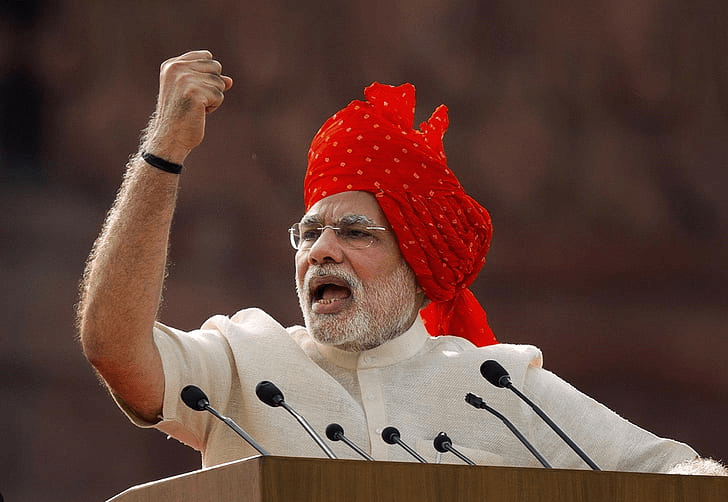
Families dismantled by Narendra Modi in his pursuit of power – destabilisation politics Vasundhara Raje Scindia sidelined
Families dismantled by Narendra Modi in pursuit of power. Vasundhara Raje Scindia, has had a complex relationship with the party’s central leadership, particularly under Prime Minister Narendra Modi and Home Minister Amit Shah.
In the run-up to the 2018 Rajasthan Assembly elections, Raje received limited support from the central BJP leadership. This was seen as a strategic move to distance the party’s image from any potential anti-incumbency sentiment against her government.
There were reports of power struggles within the state unit, with the central leadership attempting to reduce Raje’s influence. This included encouraging other leaders in Rajasthan to take on more prominent roles.
After the BJP lost the 2018 Rajasthan Assembly elections, Raje stepped down as Chief Minister. The central leadership did not push for her to take on a significant role in the party either in the state or at the national level, further sidelining her influence.
The BJP’s central leadership promoted other leaders in Rajasthan, such as Satish Poonia, who was made the state BJP president. This move was seen as a clear indication of sidelining Raje and moving away from her leadership.
Despite her stature, Raje was not given a significant role in the national party structure. Unlike other former Chief Ministers, she was not included in key committees or decision-making bodies, signalling her sidelining.
There have been efforts to reduce Raje’s influence over the Rajasthan BJP’s local units. The central leadership had been keen to build a team of loyalists in the state who had directly aligned with Modi and Shah’s vision.
Various media reports and political analysts noted that Raje’s sidelining was part of a broader strategy by the BJP central leadership to maintain tighter control over state units and reduce the influence of regional satraps who had significant individual power bases.
The sidelining of Vasundhara Raje Scindia appeared to be a part of the BJP’s strategy to maintain a centralized control structure and prevent strong regional leaders from gaining too much influence.
The Second Gandhi Family at check
Families dismantled in pursuit of power. Narendra Modi and the Bhartiya Janata Party (BJP) leadership took a strategic approach to minimize the influence of Maneka Gandhi and Varun Gandhi in Uttar Pradesh (UP) politics. Varun Gandhi was sidelined from major party roles. He was removed from the BJP’s national executive committee, which diminished his influence within the party.
Neither Maneka nor Varun Gandhi was given prominent roles in BJP’s campaign strategy or leadership in UP. Both Maneka and Varun Gandhi were given party tickets to contest elections but from seats that do not significantly influence the broader state politics. For instance, Varun Gandhi represented the Pilibhit constituency, while Maneka Gandhi had contested from Sultanpur. These seats, did not hold sway over larger regional dynamics.
The BJP leadership under Modi focused on other prominent UP leaders, such as Yogi Adityanath, Keshav Prasad Maurya, and other local influencers, effectively building a new power structure within the state that did not rely on the Gandhis. The strategy backfired. Yogi Adityanath defied the dictates of Narendra Modi and Amit Shah when they tried to replace him when the party faced defeats in the Lok Sabha Elections held in 2024.
The Modi-led BJP has emphasized a narrative of nationalism, Hindutva, and development. This broader ideological appeal often overshadowed the individual clout of leaders like Maneka and Varun. In Modi’s government, neither Maneka nor Varun held significant portfolios that could allow them to wield influence or cultivate a large political base. Varun Gandhi was not given a ministerial role in the central government.
Varun Gandhi was not given leadership roles in the BJP’s youth wing or other influential organizational positions, curbing his ability to build a separate power base within the party.
The media often focuses on the central leadership of Modi and Amit Shah and the state’s Chief Minister, Yogi Adityanath. The lack of media focus on the Gandhis diminishes their public visibility and influence.
Through these strategies, Narendra Modi and the BJP managed to reduce the political influence of both Maneka and Varun Gandhi in UP, making the state’s political landscape more cantered around Narendra Modi’s broader ideological and strategic goals.
Yogi Adityanath Versus the duo Narendra Modi and Amit Shah
Families dismantled in pursuit of power by Narendra Modi. Speculations were afloat about a growing rift between Uttar Pradesh Chief Minister Yogi Adityanath and the central leadership of the BJP, particularly involving Prime Minister Narendra Modi and Home Minister Amit Shah.
After the 2022 Uttar Pradesh elections, the presence of Amit Shah during key meetings with Yogi Adityanath highlighted the central leadership’s control.
This presence signalled that while Yogi Adityanath, a significant figure within the party, the ultimate decision-making power rested with the central leadership of Modi and Shah. The appointments of certain ministers in Adityanath’s government, were close to Modi and Shah.
Both Yogi Adityanath and Union Minister Nitin Gadkari yield substantial backing from the Rashtriya Swayamsevak Sangh (RSS), which had a powerful influence within the BJP. This relationship with the RSS might offer Adityanath some level of independence, but it added a layer of complexity to his interactions with the Modi-Shah duo.
In terms of political rhetoric, both Amit Shah and Yogi Adityanath engaged in aggressive polarizing strategies, suggesting they had been on the same page regarding certain ideological standpoints. For instance, both leaders made statements targeting opposition parties on sensitive issues, which indicated a coordinated approach rather than isolation.
The family of Aam Aadmi Party shattered
Families dismantled in pursuit of power by Narendra Modi. Since coming to power in Delhi, AAP had frequently clashed with the office of the Lieutenant Governor (LG), who represents the central government. AAP leaders, including Arvind Kejriwal accused the LG of obstructing the functioning of the Delhi government.
AAP has criticized the central government for not giving Delhi full statehood, which would allow the Delhi government more control over law and order.
In 2015, the AAP government attempted to assert control over the Anti-Corruption Bureau (ACB) of Delhi. The central government, however, issued a notification stating that the ACB could not investigate central government employees, which limited the AAP government’s ability to tackle corruption, a key promise of their election campaign.
Over the years, several AAP leaders, including Arvind Kejriwal, faced investigations and legal actions, often on charges of corruption, defamation, and inciting riots. AAP alleged that these cases were politically motivated, orchestrated by the BJP-led central government to discredit and harass AAP leaders.
The AAP government accused the central government of deliberately obstructing its welfare and development programmmes by delaying approvals, withholding funds, and creating administrative hurdles. Examples included delays in the implementation of schemes related to education, health, and infrastructure.
There had been accusations from AAP leaders that the central government put the party under surveillance, monitoring the activities of its leaders. AAP claimed that their phones were tapped and their movements were watched, which they argued was a violation of their privacy and an attempt to intimidate them.
AAP claimed that NGOs and individuals supporting the party faced harassment through raids and investigations by central agencies. These actions viewed by AAP as efforts to weaken the support base of the party and intimidate those associated with it.
Several Aam Aadmi Party (AAP) leaders, including Arvind Kejriwal, have faced arrests or legal challenges over the years. Arvind Kejriwal faced multiple defamation cases filed by political rivals, including BJP leaders.
Enforcement Directorate (ED) arrested Satyendra Jain, another key AAP leader and former Health Minister of Delhi in May 2022 on charges of money laundering. Jain faced prolonged judicial custody and denied bail on several occasions.
Somnath Bharti, an AAP MLA, faced several legal challenges, including a domestic violence case filed by his wife and an alleged involvement in a midnight raid in a south Delhi locality targeting African nationals.
Several other AAP leaders, including MLAs, faced arrests or legal challenges over various issues, ranging from protests and agitation to accusations of corruption and assault
In 2022, Sanjay Singh named in a controversy related to the Delhi excise policy, which also involved other senior AAP leaders such as Manish Sisodia. He had been arrested by the Enforcement Directorate (ED) in October 2023 in connection with a money laundering case linked to the Delhi excise policy.
Supreme Court granted bail Sanjay Singh, a leader of the Aam Aadmi Party (AAP) and Rajya Sabha MP in April 2024.
Enforcement Directed Arvind Kejriwal arrested in case related to Delhi Excise Policy. He got interim bill for canvassing for his Party in 2024 elections. He surrendered to the jail authorities.
However, the lower court granted him bill and he again arrested by Central Bureau Investigation. His case would come up in the Supreme Court in September for a decision.
Navjot Singh Sidhu’s Political Career and Narendra Modi connection
Families dismantled in pursuit of power by Narendra Modi. Sidhu entered politics in 2004 with Bhartiya Janata Party. He got elected as a Member of Parliament (MP) from Amritsar in the 2004 and 2009 general elections.
In 2016 he went to Rajya Sabha by BJP. He resigned from the Rajya Sabha and later quit BJP. He joined the Indian National Congress in January 2017. Soon after joining, Sidhu contested and won the Punjab Legislative Assembly elections from the Amritsar East constituency and appointed as a minister in the Punjab government led by Captain Amarinder Singh, serving as the Minister of Local Government, Tourism, and Cultural Affairs.
His relationship with Captain Amarinder Singh became strained, leading to public disagreements and a resignation from his ministerial post in 2019. In July 2021, Sidhu appointed as the President of the Punjab Pradesh Congress Committee, which positioned him as a significant leader in the state.
His tenure as the state party president marked by internal conflicts and factionalism within the Punjab Congress. In September 2021, Sidhu resigned from the post amid disagreements over appointments in the Punjab cabinet and administrative positions, though he continued to remain active in politics.
After the Congress’s defeat in the 2022 Punjab Assembly elections, Sidhu was further marginalized within the party. He maintained a relatively lower profile in politics since then. His political meanderings may be attributed to the Narendra Modi and his brand of politics.
Captain Amarinder Singh and his family journey with Narendra Modi and now almost negligible.
Families dismantled in pursuit of power by Narendra Modi. Amarinder Singh’s political journey has been marked by significant shifts, strategic alliances, and leadership roles in Punjab. He started his political career with Congress. He resigned from it, on the pretext of the Operation Blue Star 1984. He rejoined Congress and became Chief Minister of Punjab twice.
The entry of Navjot Singh Sindhu in the Congress politics, created a schism. He resigned from Congress. He floated a political party Punjab Lok Congress in 2021 and aligned with Shiromani Akali Dal (Sanyukt). He failed to achieve any perceptible gains in 2022.
In the elections held in 2022, the Congress lost to Aam Admi Party. Amarinder Singh did not do well in the elections. He merged his party with BJP and joined it too.
Despite the recent setbacks, he remained a key figure in the region’s political arena, with his family also playing important roles. Narendra Modi hand was suspected in their political career debacle.
Vinesh Phogat wrestling career was shattered by the duo Amit Shah and Narendra Modi
Families dismantled in pursuit of power by Narendra Modi. Vinesh Phogat was among the leading figures in protests against Brij Bhushan Sharan Singh, the then-president of the Wrestling Federation of India who was accused of sexually harassing several female wrestlers.
She, along with other prominent Indian wrestlers like Sakshi Malik and Bajrang Punia, raised serious allegations against Singh, claiming that he had sexually harassed multiple female athletes over the years. The wrestlers accused Singh of abusing his position of power to exploit and harass female wrestlers.
The protests began in January 2023 and involved sit-ins at Jantar Mantar in New Delhi, demanding that Singh be removed from his position and that a proper investigation be conducted into the allegations.
Brij Bhushan Sharan Singh denied all accusations, claiming they were baseless and politically motivated. However, the protests highlighted the challenges and issues faced by female athletes in India, drawing attention to the need for safer environments in sports.
The struggle of these wrestlers was not just about their individual cases but aimed at creating systemic changes to protect athletes from abuse and harassment, emphasizing the importance of accountability and transparency within sports federation.
Phogat faced a disappointing end to her career after being disqualified from the final match of the women’s 50kg wrestling event at the Paris Olympics in 2024. She who had made history by becoming the first Indian woman wrestler to reach the Olympic finals, was disqualified for exceeding the weight limit by 100 grams.
This disqualification occurred just before her gold medal bout against Sarah Ann Hildebrandt of the United States. She appealed against the decision, but the Court of Arbitration for Sport (CAS) dismissed her appeal. The indifferent attitude of Narendra Modi may be construed for her apathy and end of her career. Families dismantled in pursuit of power by Narendra Modi.