
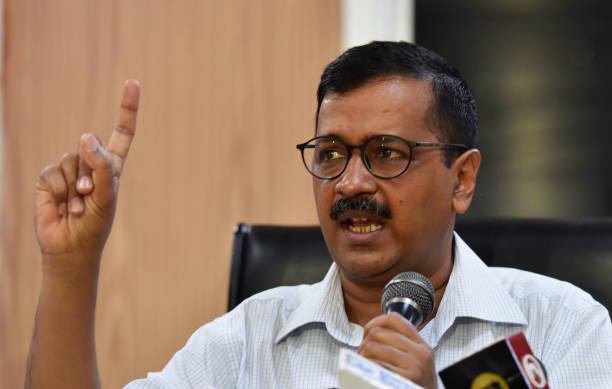
Arvind Kejriwal and Narendra Modi are two prominent figures in Indian politics, each with a distinct political trajectory and ideology. However, certain aspects of Kejriwal’s political strategy and public persona may appear similar to those of Modi, leading to the notion that Kejriwal might be “another Modi in the making.”
Charismatic Leadership and Personality Cult
Both Narendra Modi and Arvind Kejriwal have successfully cultivated a strong personal brand. Modi’s political success has been partly attributed to his image as a decisive, strong leader who embodies the aspirations of a “New India.”
Similarly, Kejriwal has positioned himself as a “common man’s” leader, promoting the narrative of an anti-corruption crusader and a deliverer of welfare programs. His projection as a simple, relatable, and down-to-earth leader has contributed to a growing personality cult around him, similar to how Modi is often perceived by his supporters.
Populist Policies and Welfare Politics
Arvind Kejriwal’s governance in Delhi has been marked by the implementation of populist policies such as free electricity, water, and healthcare services, which resonate with the masses. These welfare schemes have garnered Kejriwal a strong support base among the urban poor and middle-class voters.
Like Modi’s welfare-oriented programs like the “Pradhan Mantri Awas Yojana” (housing) and “Ujjwala Yojana” (LPG for rural households), both leaders have tapped into welfare politics to establish a direct connection with the electorate, showcasing their governments as harbingers of real, tangible benefits.
Strategic National Ambitions
Kejriwal started his political journey as an anti-establishment crusader through the India Against Corruption movement. Initially, he projected himself as a non-traditional politician, steering clear of political ambition. However, after the success of the Aam Aadmi Party (AAP) in Delhi, Kejriwal’s focus shifted to building AAP into a national force, contesting elections in several states like Punjab, Goa, and Gujarat.
This strategic expansion mirrors Modi’s journey from being Gujarat’s Chief Minister to becoming the prime ministerial face of the Bhartiya Janata Party. Kejriwal’s foray into national politics reflects a similar desire to play a more dominant role on the country’s political stage.
The skillful Use of Media
Both leaders are known for their savvy use of media to control the narrative. Modi has a well-oiled communication machinery that shapes his public image through social media campaigns, radio programs like “Mann Ki Baat,” and carefully curated appearances.
Kejriwal, though starting as an anti-media figure, has adapted his approach, becoming adept at using social media, press conferences, and advertisements to highlight his government’s achievements and counter political rivals.
Kejriwal’s AAP government has made extensive use of media promotions, especially in Delhi, to showcase their policies and accomplishments, much like the BJP’s media strategies at the national level.
Centralized Leadership Style
A key similarity between Modi and Kejriwal is their centralized style of governance. In the BJP, Modi’s influence is evident in policy decisions, with his inner circle holding significant power. Kejriwal exhibits a similar pattern within the AAP, where decision-making is heavily centralized around him. Instances of internal dissent within the party have often resulted in the expulsion or marginalization of opposing voices, reflecting a top-down leadership style.
Playing the Victim Card
Arvind Kejriwal has often positioned himself and his government as victims of the central government’s interference, particularly blaming the BJP-led Union government for blocking Delhi’s progress. This rhetoric is akin to how Modi, during his tenure as Gujarat’s Chief Minister, accused the central government of discrimination. This “victim card” strategy helps consolidate their respective political bases by portraying themselves as fighters against a larger, oppressive system.
Nationalistic and Soft-Hindutva Stance
While Kejriwal’s political narrative originally emphasized secularism and progressive policies, recent political strategies have included a subtle shift towards a more nationalistic and soft-Hindutva stance. For instance, during the 2020 Delhi elections, Kejriwal was seen visiting temples and promoting the idea of a ‘Hanuman Bhakt’ (devotee of Hanuman).
This approach mirrors Modi’s blending of development politics with a cultural-nationalistic narrative, suggesting an attempt to appeal to a broader voter base, including those swayed by religious identity.
The Aam Aadmi Party (AAP), founded by Arvind Kejriwal in 2012, emerged from the India Against Corruption movement. Over the years, AAP has focused on governance, anti-corruption measures, and social welfare schemes. Here’s a brief overview of AAP’s major political ventures, highlighting both successes and failures:
In summary, AAP’s political journey has seen significant successes, particularly in Delhi and Punjab, where its focus on governance, education, and welfare has resonated with voters. However, its expansion efforts outside these areas have largely been unsuccessful, and the party faces ongoing challenges in maintaining its promises and addressing political obstacles.
Arvind Kejriwal is another Narendra Modi in the making: Nuisance to BJP and RSS
Arvind Kejriwal, the leader of the Aam Aadmi Party (AAP) and the Chief Minister of Delhi, has been seen as a distinct political force in India, often focusing on issues like corruption, education, and healthcare.
His political stance has traditionally been viewed as secular and people-centric, differing from the RSS (Rastriya Swayamsevak Sangh), which is generally associated with Hindu nationalist ideology. However, there have been instances in Kejriwal’s political actions that seem to reflect certain elements typically associated with the RSS approach:
In recent years, Kejriwal has adopted a softer approach toward cultural nationalism. For example, he has promoted Hindu festivals and religious symbols, such as lighting oil lamps during Diwali and organizing grand celebrations for Hanuman Jayanti. This could be seen as aligning with the RSS’s emphasis on promoting Indian culture and traditions rooted in Hinduism.
Kejriwal has taken a more assertive stance on issues of national pride and identity. His push for the display of national flags in schools and public places, as well as emphasizing patriotic education in the Delhi school curriculum, resonates with the RSS’s advocacy for instilling a sense of nationalism.
While AAP’s educational reforms focus on quality, accessibility, and infrastructure, the party has also introduced curricula that stress values, patriotism, and moral education. The RSS has long promoted value-based education that reflects Indian culture and ethics, and Kejriwal’s educational initiatives seem to align partially with these goals.
Kejriwal has occasionally adopted religious symbols and practices, such as visiting temples and invoking Hindu deities in his political messaging. This approach bears similarities to the RSS’s strategy of consolidating Hindu sentiments, although Kejriwal’s methods are more inclusive and aimed at garnering broader support.
Despite these parallels, Kejriwal’s actions are not strictly identical to the RSS ideology. His political actions appear to be a pragmatic blend of appealing to a broad voter base while promoting secular governance, rather than a full alignment with the RSS’s Hindu nationalist framework.
Arvind Kejriwal is another Narendra Modi in the making – a checkmate to Rahul Gandhi
AAP’s Relationship with Congress
AAP emerged in 2012 out of the India Against Corruption movement, which targeted both the BJP and the Congress, accusing them of widespread corruption. Kejriwal’s initial political stance was primarily anti-Congress, positioning AAP as a clean alternative to traditional parties.
In Delhi, AAP and the Congress are direct competitors. While AAP has consistently routed the Congress in Delhi Assembly elections (2015 and 2020), the two parties often vie for the same voter base, especially in urban areas.
Despite their rivalry, AAP and Congress have found common ground on several national issues, particularly when opposing the BJP. This tentative cooperation became more noticeable in recent years with the formation of the INDIA alliance, which aimed to present a united front against the BJP in the 2024 general elections.
Kejriwal’s focus on grassroots issues like education, healthcare, and corruption has sometimes clashed with Congress’s broader political strategies. This policy-driven approach has allowed AAP to distinguish itself, often criticizing Congress for its traditional politics.
Kejriwal within the INDIA Alliance
The INDIA alliance, formed as a counter to the BJP-led NDA (National Democratic Alliance), includes parties like Congress, AAP, TMC, and others. Kejriwal’s AAP joined the alliance despite its historical rivalry with Congress, indicating a strategic decision to consolidate opposition strength against the BJP.
Although AAP is a part of the alliance, differences occasionally surface. AAP has been wary of Congress’s dominant role within the alliance, especially since Congress has a pan-India presence and AAP is still relatively limited to specific states. Kejriwal has maintained the AAP’s independent voice, often emphasized regional issues, and criticized the policies of other alliance members when they contradict the AAP’s principles.
Kejriwal and the INDIA alliance parties, including Congress, share common ground on issues such as protecting democracy, opposing authoritarian governance, and resisting policies they view as undermining constitutional values. However, AAP and Kejriwal remain vigilant about safeguarding their political identity, even within this collective effort.
Recent Developments
Arvind Kejriwal’s engagement with the INDIA alliance represents a careful balancing act. While AAP collaborates with Congress and other parties to strengthen opposition unity, it remains critical of Congress when their interests diverge, especially in states like Punjab, where AAP is a ruling party and Congress is a contender. He did not agree to have an alliance with Congress for the forthcoming State elections.
His politics vis-à-vis Congress within the INDIA alliance will likely continue to be marked by tactical collaboration, cautious interaction, and assertive articulation of AAP’s distinct political ideology.
The AAP government faced legal scrutiny over the alleged misuse of public funds for self-promotional advertisements. The Delhi High Court, in 2016, directed the government to repay funds spent on such advertisements, emphasizing the need for transparency and accountability in the use of taxpayer money.
Arvind Kejriwal is infested with Modi effect
It is understood that when Arvind Kejriwal was released on bail he seemed to have had a deal with the investigating agencies. The deal was that he would not have any alliance with Congress in the future or the next Delhi Assembly elections. Soon he started tirades against the BJP only to please the INDIA alliance partners. After the Maharashtra elections, he started parleys with Mamata Banerjee, Akhilesh Yadav, Tejaswi Yadav, Uddhav Thakre, Omer Abdullah, and of course, the Adani cronies.
He impressed them that Congress should be kept away so that their political future is safe. To some extent, he could manage them and these INDIA partners have made negative remarks against Congress. Kejriwal succeeded in aligning them in the Delhi Assembly elections held in 2025. He was approached by the Congress Party to have an alliance with them. But he refused and released a poster in which Rahul Gandhi was shown as the third most corrupt politician in the Country.
INDIA front partners came for the canvassing for the AAP. Congress which was a reluctant entrant in the elections, started aggressive campaigning. Kejriwal was rattled but did not accede and was confident, based on the media reports, that AAP would retain its hold on Delhi for the fourth time.
Kejriwal had no idea that the BJP was playing a spoil-sport with him. He was not only defeated in the New Delhi constituency but his senior colleagues like Manish Sisodia, Satyendra Jain, Saurabh Bharadwaj etc. lost. It was Modi’s effect and the Congress resurgence. It is hoped that Kejriwal has learned his lesson for ignoring the Congress effect. If he does not come out from the Modi effect, his future and the future of AAP would be in danger and the AAP might also face the same kind of hurdles in Punjab, that it had faced in Delhi.
Arvind Kejriwal hurled five questions at the RSS and sought answers for them.
- By using agencies such as CBI, ED, and IT Department against opponents, is Modi not harming the democratic institutions of the country?
- Why did Modi admit the most corrupt leaders into the BJP Party, does Mohan Bhagwat agree with this type of politics or did Bhagwat ever imagine such situations in BJP?
- BJP is an offshoot of the RSS. Is it not its duty to stop Modi from doing such immoral activities sitting on the Chair of the Prime Minister? Did Mohan Bhagwat ever advise him not to resort to such things?
- RSS is the mother organ of the BJP. Is it right, that it’s part of the organ to stare at it? How did the RSS feel when JP Nadda, declared that the BJP would not need the help of the RSS? Did not Mohan Bhagwat feel bad and how RSS cadre feel about his remarks?
- Is it not the policy of the RSS to retire the BJP leaders when they attain the age of 75? You did for many senior leaders. But Amit Shah refuted your claims and said that it would not apply to Narendra Modi. Do you agree with Amit Shah?
Arvind Kejriwal is another Narendra Modi in the making: Nuisance to BJP and RSS – A last word
While Kejriwal and Modi have differences in terms of ideological backgrounds and political origins, certain political tactics and strategies employed by Kejriwal do reflect Modi’s approach. From cultivating a strong personality-driven leadership to leveraging welfare politics, centralized decision-making, and adapting media strategies, Kejriwal exhibits traits that resonate with Modi’s political playbook. However, whether Kejriwal can ascend to a Modi-like stature on the national stage remains a subject of Indian politics’ dynamic and complex nature.
Arvind Kejriwal, leader of the Aam Aadmi Party (AAP) and former Chief Minister of Delhi, has had a complex political relationship with both the Congress and the INDIA (Indian National Developmental Inclusive Alliance) coalition, which has brought together several opposition parties in India.
Arvind Kejriwal’s intentions are not good and he might even consider, a walk away from the INDIA front in the future.