
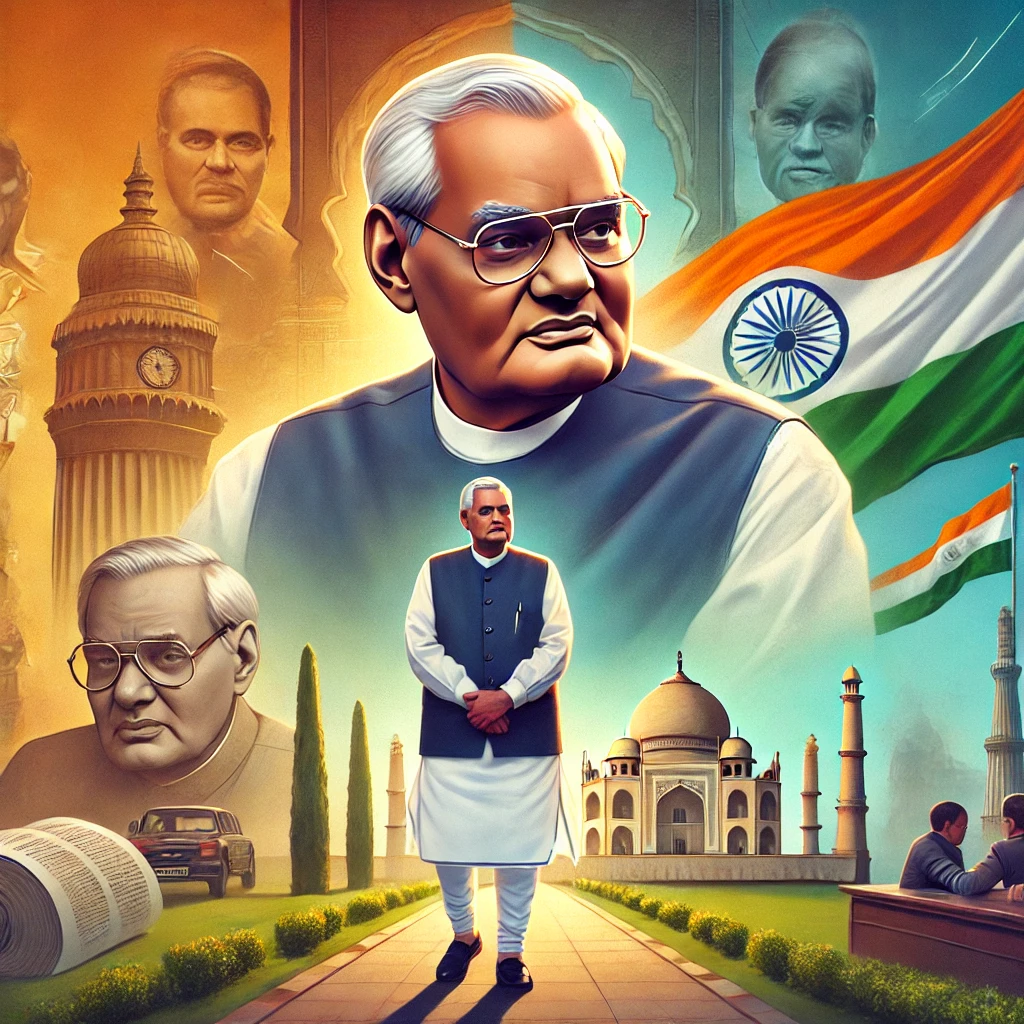
The former Prime Minister of India, Atal Bihari Vajpayee once urged that every elected leader should follow a royal duty over one’s personal ambition. He stated this while sitting beside Narendra Modi, the then Chief Minister of Gujarat. Modi replied that it was what he had been doing looking at Vajpayee miserably. Vajpayee hoped that he would follow the royal duty. But Modi would not do so or has not been doing so while sitting on the Chair of Prime Minister of India.
Modi known for his epithetomology, announced his first volume of epithets based on his 11 years of rule on the lines of 370, the article on which he had put the State of Jammu & Kashmir on the map of the Union Territories, by suspending its Statehood, abrogating the provisions of the Article 370, on the basis of which the State had been running since its inception.
He would add an epithet for every year he succeeds to rule the country, by hook or crook. The 11 epithets are his political teachings coined over the years of his erotic rule. But he does not stand on what he teaches. He wants to establish himself as a Hindu Hridaisamrat (the emperor of the contemporary Hindus) of the Hindus like Swamy Vivekananda and political philosopher like Chanakya, but has failed on both of the planks.
Ancient Indian governance, as seen in the Mauryan and Gupta empires, emphasized dharma (moral law) as central to administration. Kautilya’s Arthashastra detailed principles of governance rooted in justice and duty. Let us revert his 11 resolutions for the purpose of better presentation:
1) One India, Great India
The epithet Ek Bharat, Shreshtha Bharat, a government initiative aimed at promoting national integration, fostering a spirit of unity, and celebrating the cultural diversity of India.
The programmes like “Bharatmala” and “Sagarmala”, Skill India Mission, Make in India, Ayushman Bharat etc., have remained slogans. While the government has made strides in promoting “One India, Great India,” challenges like regionalism and resource imbalances remain.
2) Development of the nation through the development of the States
It underscores the India’s federal structure and depends on the well-being and development of its individual states for overall prosperity. The schemes such as GST, Atmanirbhar Bharat (self-reliant India), PM Kisan Samman Nidhi, Swachh Bharat Mission, Digital India through Bharat Net, rejig of the Planning Commission to NITI Ayog have not achieved their goals. Despite progress in some states, others lag behind due to poor governance, lack of resources, or political differences. and over over-centralization of powers.
Data shows delays in GST compensation to states, leading to friction between the Union and states. For instance, in 2020-21, GST dues of over ₹1.5 lakh crore were pending for months, causing fiscal stress to states
3) Women-led development
The government of India emphasized women-led development, as a key to its policy framework, where women were seen as beneficiaries of welfare schemes, an inclusive and empowering approach by which women are viewed as drivers of economic, social, and political emancipation.
The initiatives like Economic Empowerment, Increased Workforce Participation, Entrepreneurship Opportunities through MUDRA, Social Transformation, Better Resource Allocation. Improved Gender Equality, Political Empowerment, Representation in Governance, Environmental Conservation have not seen the light of the day require progress due to stress on one individual entrepreneurship.
The schemes like Beti Bachao Beti Padhao (Save the Girl Child, Educate the Girl Child, Pradhan Mantri Ujjwala Yojana, SHG Movement (Self-Help Groups), Cultural Barriers, Skill Development, Workplace Inequality etc. are not just about empowering women but also about harnessing their potential to address broader societal challenges. By fostering a supportive environment through education, skill development, and representation, women can drive transformative change in India’s developmental journey. However, hey remained paper tigers. The Women’s reservation on legislatures, is a mirage.
4) Reservation for classes provided under the Constitution to continue but no reservation based on religion
The Indian Constitution, through Articles 15(4) and 16(4), provides for reservations to address the socio-economic and educational backwardness of certain classes, particularly, Scheduled Castes (SCs), Scheduled Tribes (STs), and Other Backward Classes (OBCs). Within religious communities like Muslims or Christians, backward classes (e.g., Dalit Muslims or Dalit Christians) have ready been made be eligible for benefits if they fall under the OBC or SC category.
Reservations exclusively based on religion could be viewed as divisive and counter to the principle of secularism enshrined in the Constitution. It might also lead to demands for similar religious-based quotas, creating a precedent for segregating benefits along religious lines.
The Supreme Court of India has often upheld the principle that reservations should be class-based. For example, in cases like Indra Sawhney v. Union of India (1992), the Court emphasized that backwardness must be social and educational, not merely religious. Attempts to provide religion-based quotas have been struck down in the past, reinforcing the principle of secularism. The opposition’s demand for reservation based on caste is not digested by the Modi government.
5) The Constitution be respected and not used as a tool for political gain
The implementation of the Constitution of India in 1950, drafted by Dr. B.R. Ambedkar and others, though meandering with hurdles, emphasised a commitment to justice, equality, and democracy. It is rooted in the principle that the Constitution serves as the supreme legal framework guiding governance, protecting rights, and ensuring justice. Using it selectively or manipulating its provisions for political expediency undermines democracy and constitutional sanctity. The Constitution is a living document meant to evolve with the times, but its core principles must remain sacrosanct.
Its misuse can occur through selective application of provisions to favour political objectives. Amendments or ordinances that bypass proper legislative scrutiny. Undermining constitutional bodies like the judiciary, Election Commission, or federal agencies.
The current dispensation claims to uphold the Constitution, citing measures aimed at inclusivity, economic reform, and stronger governance. However, critics argue that several actions point to potential constitutional misuse.
One Nation, One Election concept is being criticised that such reforms might centralize power, undermining federalism and disadvantaging smaller regional parties. Moreover, concerns have been raised about the independence of the Election Commission, especially regarding the timing of elections and decisions that seem to favour ruling parties.
The CAA (Citizenship Amendment Act) 2019 and the proposed NRC (National Register of Citizens) have been criticized as discriminatory, potentially violating the constitutional principle of equality under Article 14. Allegations have been made about interference in judicial appointments and decisions. The Collegium system and the delays in clearing appointments have drawn criticism. The elevation of Justice Ranjan Gogoi to take a Rajya Sabha seat raised questions about judicial neutrality.
India’s rank on the World Press Freedom Index 2024 was 161 out of 180, with reports of press restrictions and misuse of sedition laws under Section 124A of the Indian Penal Code. This indicates potential constitutional misuse against dissent. Data from PRS Legislative Research shows a decline in the number of bills referred to parliamentary committees for detailed scrutiny—from 60% in 2009-14 to less than 25% in 2019-2024.
6) Strengthening Democracy by Eradicating Nepotism from Politics.
Democracy survives on equality, representation, and accountability. Nepotism in politics negates these principles by promoting unearned status, destroying meritocracy, and distancing the electorate. Removal of nepotism is an imperative to strengthen democracy.
A 2019 study by Carnegie Endowment for International Peace found that nearly 30% of Members of Parliament in India belong to political families. This number rises to 43% among younger MPs (under 40 years), suggesting entrenched political dynasties. A 2021 Pew Research study highlighted that 55% of Indians believe political corruption is a significant problem, often linked to dynastic politics.
A 2023 Lokniti-CSDS survey in India revealed that over 60% of youth feel that dynastic politics discourages their participation in governance
7) Citizens should be free from the slavery mentality and take pride in the country’s cultural heritage
A powerful call for action for social transformation. It refers to a psychological dependence on foreign ideas, systems, and cultures, resulting from the British rule.
India has a vibrant cultural legacy, diverse languages, Ayurveda, architecture like Taj Mahal, Hampi etc., Bharatanatyam, Kathak, Odissi etc., the systems like Vedanta, Buddhism. The Ayurveda and yoga are recognized worldwide. The wellness industry, by these practices, is estimated to be worth $1.4 trillion globally, with India’s share is growing.
According to a report by the Ministry of Education (2023), over 70% of Indian students in higher education prefer English-medium instruction. UNESCO estimates that by 2050, 40% of the world’s spoken languages, may become extinct if not preserved. Citizens are required to break free from dependency while fostering an inclusive pride in their heritage.
8) Sense of pride be instilled in following the country’s laws and traditions
It stresses the importance of dovetailing personal conduct with national values, heritage, and legal frameworks. In India during the last 11 years under the current government, this concept has been emphasized through various initiatives aimed at fostering nationalism, cultural revival, and respect for the rule of law.
The International Day of Yoga, declared by the United Nations in 2015 at India’s initiative, has made yoga a global phenomenon. Cultural tourism has emphasized the importance of Indian traditions. The Swachh Bharat Abhiyan (Clean India Campaign) encourages citizens to contribute to cleanliness and hygiene, making it both a legal and moral responsibility.
Though these initiatives have nurtured pride in many quarters, challenges remain. Critics argue that some cultural revival initiatives have been selective, marginalizing certain traditions or communities. The implementation of certain laws, like the Citizenship Amendment Act (CAA), has sparked protests,
9) A zero-tolerance policy towards corruption and end social acceptance of corrupt individuals.
Demonetization (2016) was brough to eliminate black money, reduce corruption, and promote a cashless economy. It targeted unaccounted wealth. However, its actual impact on curbing corruption remains as 99.3% of the demonetized currency returned to the system. Direct Benefit Transfer (DBT), Benami Transactions Prohibition Act (2016), Digital Governance, Digitization have become vulnerable to corruption. The Insolvency and Bankruptcy Code (IBC) has become a boon to Industry.
The Central Bureau of Investigation (CBI) and the Enforcement Directorate (ED) have been selectively targeting opposition leaders, raising concerns about political motivations overshadowing genuine anti-corruption drives.
While legislation like the Lokpal Act was passed during the UPA regime, the Modi government has been criticized for not appointing a Lokpal until 2019, after significant delays. Electoral bonds introduced in 2017 have been critiqued for reducing transparency in political funding, as the identities of donors remain anonymous. Accepting the reality of the attacks, the Supreme Court of India declared the scheme as un-constitutional.
Opposition parties and critics frequently accuse the government of favouring select industrialists. For instance, the allocation of airport contracts to the Adani Group and the alleged dilution of laws. India ranked 85th out of 180 countries in the 2022 Corruption Perceptions Index by Transparency International, showing little change compared to previous years. However, the misuse of government agencies over the past 11 years has raised significant concerns about the integrity of this social contract.
10) Every region and society should equally benefit from development, upholding the spirit of “”Sabka Sath Sabka Vikas”
It subscribes to the broader objectives of equity, justice, and balanced development In essence. The advanced states like Maharashtra, Gujarat, and Karnataka have seen disproportionate benefits from policies compared to BIMARU states (Bihar, Madhya Pradesh, Rajasthan, Uttar Pradesh). Northeast India and Jammu & Kashmir, face slower progress.
The Dalits, Adivasis, and religious minorities, have often expressed concerns about being sidelined in policy formulation and benefits. Reports of rising communal polarization have raised questions about the inclusivity of development. Farmers across the country, continue to struggle despite schemes like PM-Kisan and Fasal Bima Yojana. Disputes over GST compensation and resource distribution have highlighted tensions between the Centre and states. The “Sabka Sath Sabka Vikas,” governance ought to adopt a more equitable approach, ensuring the progress.
11) All citizens and government officials should perform their respective duties.
Mahatma Gandhi National Rural Employment Guarantee Act (MGNREGA) the Ganga under the Namami Gange often fail due to lack of diligence in implementation.
Industrial discharge, farm rubble and domestic waste led increasing pollution levels, demonstrating citizens’ failure to cooperate despite public awareness campaigns. Initiatives like Odd-Even in Delhi attempted to address pollution but lacked consistent enforcement. Over the last 11 years, India’s governance significant gaps remain in accountability and participation.
The philosophy of epithetomology Vs. Royal Duty. 11 resolutions for now, many more to come in future – The Conclusion
Ancient Indian governance, as seen in the Mauryan and Gupta empires, emphasized dharma (moral law) as central to administration. Kautilya’s Arthashastra detailed principles of governance rooted in justice and duty.
Removal of a photo of the surrender pact of East Pakistan on 16th September, 1972 from Sena Bhavan is not a good sign nationalism by the present government. If government does not respect the bravery of the Indian army, what do you expect from the public. The Prime Minister, Narendra Modi has not understood the tenet of ‘Raj Dharma’ taught by Atal Behari Vajpayee. Long live India and long live Democracy!
A Homage to Dr. Man Mohan Singh
Dr.Man Mohan Singh, a great son of India, an economist of par excellence and former Prime Minister of India, who passed away on 20.12.2024, whose policies should be remembered and adopted by Prime Minister Narendra Modi. My heart felt condolences to Dr.Man Mohan Singh’s demise. Every should one should watch this video which is a true homage to Dr. Singh: