
Mohan Bhagwat,74 has been the Head/Chief of RSS since 2009. Bhagwat has been a great guiding spirit to the RSS and the leaders of the Bharatiya Janata Party. Most of the BJP leaders, cadres are from the RSS since BJP is the political wing of the RSS. Narendra Modi was an active propagator of RSS and has since been elevated to be the active member and for the party. Amit Shah was one of the pracharaks of the Sangh.
Bhagwat joined RSS in early 1970. He rose to the power by dint of hard work and devotion to the philosophy of the RSS. He served the organisation in various positions from In-Charge of Physical Training, General Secretary and to the position of the Chief of the RSS. His rise marked a shift in the Sangh’s leadership, mixing it with modern challenges and opportunities. He has been a Hindutva ideologue but with flexibility on contentious issues.
His statements on caste harmony and interfaith unity demonstrated his willingness to reinterpret traditional values for contemporary relevance. He believed in a collective leadership. His speeches often balance ideological assertion with calls for unity and nationalism. He diplomatically mediated between RSS hardliners and the BJP’s political leadership, ensuring cohesion within the Sangh. Bhagwat, as Sarsanghchalak, has been instrumental in backing Modi’s leadership during key political moments, including his appointment as the BJP’s prime ministerial candidate in 2013.
Bhagwat supported Modi’s vision of a strong and self-reliant India. However ideological differences surfaced. Bhagwat’s stance on caste and reservation contrasts with Modi’s populist politics. Modi’s centralized leadership style sometimes overshadows the collective decision-making ethos of the RSS. Despite differences Modi relied on the RSS’s cadre strength, while Bhagwat acknowledged Modi’s mass appeal and political mettle.
Amit Shah, as the BJP’s chief strategist, utilised RSS support for electoral successes. Bhagwat’s approval was sought for candidate selection and policy decisions, ensuring smooth sailing between the RSS and BJP. Shah’s aggressive, centralized approach to decision-making occasionally confronted with the RSS’s decentralized and ideological style. However, Shah’s reverence for Bhagwat as an ideological guide helped him maintain a functional relationship.
Yogi Adityanath, stated to be firebrand Chief Minister of Uttar Pradesh, represented a more assertive and orthodox Hindutva compared to Bhagwat’s relatively inclusive approach. While Yogi was not an RSS pracharak, but a product of Gorakhnath math. Bhagwat appreciated Yogi’s commitment to Hindutva causes and has since become a favourite of the RSS. However, Bhagwat’s emphasis on caste reconciliation contrasted with Yogi’s Hindutva. Despite Bhagwat, supported Yogi during critical moments, such as communal controversies and his bulldozer politics.
Yogi’s growing popularity as a Hindutva icon and potential successor to Modi could pose challenges to Bhagwat’s influence over the BJP and more so with Amit Shah’s scope of thinking. This plank of Yogi was not liked by Amit Shah and Modi was successfully brain washed over the years. Yogi’s rise as a Hindutva has not been digested by both Shah and Modi.
Narendra Modi and Amit Shah aim to “purge the RSS and make Mohan Bhagwat ineffective
The BJP since its inception considered the RSS as its parent organisation. Atal Bihari Vajpayee and L.K. Advani maintained a close but somewhat distinct relationship with the RSS, balancing ideological loyalty with political activism.
However, Narendra Modi and Amit Shah transformed the BJP into a centralized, personality-driven party stressing on the electoral prospects. This focus caused a friction between the RSS and the BJP.
It was stated that Narendra Modi’s appointment as the BJP’s prime ministerial candidate in 2013 was not entirely smooth. Some senior RSS leaders reportedly had reservations, favouring a more ideologically grounded leader like Rajnath Singh. Modi’s subsequent victory in 2014 established him as a leader with mass appeal, reducing the RSS’s ability to influence key decisions.
Mohan Bhagwat’s remarks on the need to review caste-based reservations during the 2015 Bihar assembly elections were perceived as politically damaging to the BJP, which lost the election. This episode highlighted the disconnect between the RSS’s and the BJP leading to increased tensions.
In 2017, Presidential Election, the RSS stated to have preferred a traditionalist candidate for the position of President of India. However, Modi-Shah pushed for Ram Nath Kovind, a Dalit leader, as a strategic choice. This move resulted in the duo’s willingness to sideline RSS preferences for political gains.
The 2019 general election campaign was cantered around Modi’s leadership and image, with scant acknowledgment of the Sangh’s role. The BJP’s victory strengthened, the duo’s dominance. The Citizenship Amendment Act (CAA) and National Register of Citizens (NRC) faced widespread protests. While the RSS supported the laws but its role to quell the dissent and shaping public opinion was criticised. The BJP’s handling of these issues without RSS involvement was not to the likes of the RSS.
The BJP’s focus on aggressive measures, like “bulldozer politics,” and welfare schemes under Modi’s name shifted the narrative away from Hindutva ideology. The RSS’s ideological priorities seemed secondary to the BJP’s development-focused electoral strategies. Media coverage often highlighted differences between RSS and BJP on issues like caste census and the approach to religious extremism. Bhagwat’s calls for social harmony were contrasted with BJP leaders’ separatist statements. Certain think-tanks hinted at the RSS being out of touch with the emerging India. These approaches shortened Bhagwat’s image and reduced the RSS’s influence.
Modi and Shah have centralized decision-making within the BJP, sidelining traditional power structures, including the RSS. The BJP’s focus on caste coalitions, welfare schemes, and nationalism contrasted with the RSS’s ideological views. Maintaining unchallenged control helped the duo avoid scrutiny of controversial policies and actions in the past decade. Modi’s vision of a global leader ship and Shah’s ambition to create a niche for him resulted in sidelining the RSS.
Modi’s weedicide spray spreads to Rastriya Swayamsevak Sangh
Bhagwat’s call for a review of a caste-based reservation was counter-productive to the BJP. The BJP’s presidential-style campaigns under Modi contrasted with the RSS. Modi’s welfare programmes were projected as his personal achievements, minimizing RSS’s grassroots contributions.
The RSS is basically, a cultural organization rooted in Hindutva, emphasizing nation-building, social cohesion, and Hindu identity. Its ethos prioritizes collective leadership, grassroots mobilization, and long-term societal transformation over immediate political dividends. The BJP is the RSS’s most prominent political offshoot, assigned with translating Hindutva ideology into electoral and governance strategies. The RSS historically provided ideological guidance and cadre support to the BJP but maintained a formal distance from day-to-day political decisions
Orchestrated Media Attacks on Mohan Bhagwat
The RSS, under Mohan Bhagwat’s leadership, has traditionally maintained a low profile in public media discourse, focusing instead on ideological mobilization. However, recent years have seen certain narratives emerging in media that portray Bhagwat as outdated or irrelevant in the context of modern India contradictory to Modi’s vision of a globalized India.
Character Assassination by Religious Leaders
Mohan Bhagwat has faced criticism from some Hindu religious leaders and sects who opposed the RSS’s more reformist stances on the traditional Hindu practices. They accuse the RSS of politicizing religion for BJP’s electoral losses. The criticism from conservative Hindu voices regarding the RSS’s position on interfaith marriages or its silent response to extremist fringe activities and religious leaders, aligned with Modi-Shah that might distance themselves from Bhagwat’s statements to go with BJP’s practical, populist narrative. This could alienate Bhagwat and weaken the RSS’s spiritual and moral authority over BJP’s voter base.
Factionalism within the RSS created
Younger RSS cadres who admire Modi and Shah emphasis on nationalism and development-driven governance. They evince willingness to reform Hindutva ideology to modern political realities. They believe that Modi’s leadership is essential for sustaining BJP’s electoral dominance and the modern Hindutva agenda. This faction might prioritize short-term political gains over long-term cultural goals, assimilating with BJP’s current leadership.
Senior RSS leaders and ideologues who prioritize the Sangh’s basic ideology over political emergency, focus on cultural nationalism, grassroots mobilization, and social change. Resistance to the BJP’s personality cult and deviation from core principles is unlikely. Modi-Shah’s moves will weaken the RSS’s ideological foundation and organizational autonomy. This faction might assert for a more restrictive role for the RSS in guiding BJP policies or explore ways to influence society outside electoral politics.
If the BJP increasingly sidelines the RSS, the conservatives may feel isolated, leading to internal dissent or alternative strategies. Issues like caste reservation, interfaith cohesion, and economic liberalization could expedite differences between pro-Modi group and traditionalist ideologues. Younger RSS members, inspired by Modi’s, might challenge Mohan Bhagwat’s leadership creating rifts.
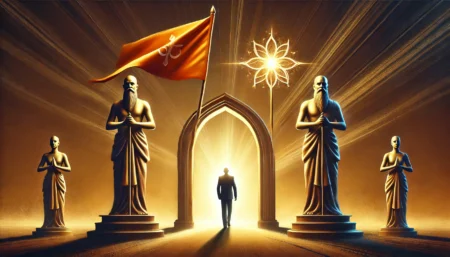
The RSS is in the grip of Narendra Modi and Amit Shah. Mohan Bhagwat is at the exit gate where a Bharat Ratna awaits him – The Survival Chances
The RSS is a strong a vast and disciplined organization, it cannot be dismantled or ignored. Bhagwat’s is non-partisan and is a powerful personality and he could be shielded from any sidelining tactics. Many BJP cadres still owe allegiance to the RSS, creating a natural check on Modi-Shah’s strategy to unseat him.
A reciprocal arrangement could emerge where the RSS continues its cultural and grassroots work while the BJP focuses on governance and electoral politics. If ideological differences emerge, the BJP might further distance itself, relying solely on Modi’s image and Shah’s organizational prowess, if the duo continue to wield power for long.
However, the thinking that Prime Minister Narendra Modi and Home Minister Amit Shah might work to sideline the RSS and its current chief, Mohan Bhagwat, is not a mere speculative interpretation of recent political moves of BJP
Given the inbuilt relationship of the BJP and RSS, an open split is unlikely. A potential truce might involve Modi-Shah acknowledging Bhagwat’s leadership in public forums while subtly sidelining RSS’s role in decision-making by awarding him Bharat Ratna to enable his voluntary retirement and replacing him with a compromising personality, who cannot dictate the BJP. The RSS limit itself in focusing more on cultural activities and grassroots mobilization, leaving political strategies entirely to the BJP.
A new RSS chief, more aligned with Modi-Shah’s vision, might emerge, ensuring continuity without open confrontation. This truce would aim to project unity while accommodating the evolving power dynamics within the Sangh Parivar.
The irony is that Bhagwat wanted to side track the duo Narendra Modi and Amit Shah, now he himself faces the heat of getting side-tracked in a systematic strategy. This is the personality of the duo, which Bhagwat failed to understand.
The question of whether the RSS might split into factions supporting Narendra Modi and Amit Shah’s political vision versus a more traditionalist wing conforming strictly to RSS philosophy depends on the evolving developments within the Sangh Parivar. While a formal split seems unlikely given the RSS’s disciplined structure and historical emphasis on unity, internal ideological differences could lead to informal factionalism or divergent approaches.
Consequences of a Split
A divided RSS could struggle to maintain its historical role as the ideological backbone of the Hindutva movement. Internal disagreements might demoralize grassroot workers and weaken the organization’s cohesiveness. The BJP bets heavily on the RSS’s huge network for mobilization during elections and campaigns. Without RSS guidance, the BJP might lose its ideological grounding, focusing solely on short-term political gains. A weakened RSS, or sidelined RSS is the wish of the duo Modi and Shah. They want that this weak trait should pave a way for the BJP to dominate the Hindutva narrative established by the RSS over the years
The imminent exit of Mohan Bhagwat
Mohan Bhagwat’s survival in the face of these challenges rely on several factors. The RSS has a s strong network and ideological loyalty among its cadre, making it vulnerable to external attacks. Bhagwat’s ability to present himself as apolitical, cultural leader might shield him from adverse political attacks. Bhagwat may seek to align with influential BJP leaders who still believe the RSS’s guidance, thereby countering Modi-Shah’s authority. However, the erosion of the RSS’s influence over BJP’s electoral machinery could significantly weaken Bhagwat’s position.
Post-Mohan Bhagwat Leadership Transition
A leadership transition within the RSS after Mohan Bhagwat’s exit, could expose clear divisions, especially if the new chief is perceived as favouring BJP. The RSS has historically demonstrated remarkable discipline and cohesion, avoiding public ire despite internal disagreements. Its hierarchical structure and emphasis on collective decision-making act as safeguards against factionalism. While a formal split is improbable, informal alignments and power struggles could emerge, with different leaders and cadres slanting towards Modi-Shah type of politics.
The Modi-Shah Era: Transformation of BJP-RSS Dynamics
Modi and Shah have transformed the BJP into a highly centralized, personality-driven political entity. This negates with the RSS’s decentralized and collective ethos. Their approach focuses on electoral activism, welfare populism, and nationalism, sometimes overshadowing core Hindutva ideology. Certain BJP policies and Modi’s global image-building exercises have occasionally diluted from the RSS’s cultural stress. The RSS’s traditionalist stake on issues like caste and social justice can clash with the BJP’s more divisive and politically motivated and dividend-oriented strategies. It is argued that Modi and Shah have restricted the RSS’s influence over the BJP by asserting their own vision for India’s governance and electoral dominance.
The Argument – BJP has come of age. It does not need RSS Support
The BJP under Modi-Shah has undergone a transformation, focusing on the mass appeal, welfare schemes, and Modi’s personal cult. The BJP’s dominance in states where RSS cadre presence is minimal, such as West Bengal, Kerala and the Northeast, shows its ability to function independently, a shift from ideological point of view to governance-focused campaigns, like “Sabka Saath, Sabka Vikas,” has nullified RSS’s the so-called authoritative influence. This change suggests that Modi-Shah may see the RSS as more of a liability than an asset, especially in regions where its Hindutva agenda could alienate voters. They do not want to bow before the RSS for every other decision they take.
The Duo’s Hidden Agenda: Long-term Rule
Modi and Shah’s focus on consolidating their supremacy, which would partly explain their distancing from the RSS. The BJP has faced allegations of covert practices and policy decisions benefiting select interests, such as, dumping businesses with Adani, demonetization, the Rafale deal, and electoral bond mechanisms. Ensuring a long-term rule for BJP may be seen as a way to shield these decisions from scrutiny, requiring the BJP to patronise loyalty with activism over ideological perspectives. The RSS, with its independent structure and moral high ground, could pose challenges to such an agenda, prompting Modi-Shah to gradually minimize the RSS influence.
The future of RSS and its relevance
Mohan Bhagwat’s rise as RSS Chief reflects a mixture of ideology, skill, and commitment. His relationship with Modi, Shah, and Yogi is mutual respect, friction and cooperation. Modi and Shah have given a new direction to BJP but centralized political hegemony. Bhagwat’ has played a great role to shape and rejuvenate RSS.
The idea that Modi and Shah aim to purge the RSS and make Mohan Bhagwat ineffective reflects the BJP’s transformation into a highly centralized, personality-driven political force. While tensions exist, the historical and ideological ties between the two entities make a complete separation is a distant dream. Instead, an evolving power equation will define their relationship, with Modi-Shah asserting their dominance while keeping the RSS in a supportive role devoid of any dictates.
The RSS is in the grip of Narendra Modi and Amit Shah. Mohan Bhagwat is at the exit gate where a Bharat Ratna awaits him – A Conclusion
Modi and Shah sidelining the RSS reflects a broader strategy of the BJP’s growing independence. While conflicts and differences may surface, the deep-rooted ideological ties and mutual benefits of their association suggest that outright falling-out is unlikely. The relationship might continue, with Modi-Shah asserting their authority while the RSS redefine its role in the changing political landscape.
A formal split is unlikely. internal ideological differences between those aligning with Modi-Shah’s progressive political agenda and hardcore traditionalists remain. The organization’s ability to balance these dynamics will determine its future role and relevance. But Modi and Shah would not like to be dictated by the RSS any more. They want the RSS to remain a cultural wing the BJP and not otherwise.