
Rahul Gandhi is often described as soft-spoken, courteous, and well-mannered. His interactions, both with political opponents and the public, generally avoid personal attacks and remain civil, which aligns with the idea of being a gentleman.
During several parliamentary debates, Rahul Gandhi has often taken a polite, respectful tone, even when criticizing his political opponents. For instance, in 2018, during a fiery no-confidence motion debate, instead of continuing an aggressive attack on PM Modi, Gandhi ended his speech by walking over to the Prime Minister and hugging him.
This unexpected gesture was widely interpreted as a sign of goodwill and respect, even in a politically charged atmosphere. While it was seen as a gentlemanly move, critics argued it showed his lack of understanding of serious political discourse.
He is very often seen as an idealist, more focused on larger values and principles, such as democracy, secularism, and inclusiveness than on practical political gains. It sometimes results in a perception that he lacks the tactical sharpness of a seasoned politician. For instance, his focus on long-term issues like poverty and institutional democracy may come across as being out of step with the day-to-day electoral processes.
Rahul Gandhi has consistently raised issues like Nyay, a minimum income guarantee scheme for the poor, during the 2019 elections. This idea was highly idealistic, focusing on systemic inequality and poverty reduction. However, many political observers criticized the proposal as lacking in practical detail and said it didn’t resonate with the voters’ immediate concerns like national security and jobs. His approach, although compassionate, was considered politically naïve because it didn’t translate into electoral success.
Many commentators have noted that Gandhi’s political career seems, at times, reluctant. He took years to assume major roles within the Congress Party and has been criticized for taking long absences during key political moments. His unpolished public speaking and difficulty in responding to political attacks contribute to this perception of him not being a natural politician.
After the Congress Party’s disastrous defeat in the 2019 general election, Rahul Gandhi publicly accepted responsibility and resigned as party president. He criticized the BJP’s electoral tactics but also admitted his party had failed to communicate effectively with the electorate. While this honesty is often seen as a mark of his decency, many argued that it showed a lack of political resilience and strategic depth. In contrast, a more seasoned politician might have stayed in the fight and re-strategized.
Gandhi’s track record in electoral politics, particularly his leadership in the Congress Party’s defeats in 2014 2019, and 2024 defeat in Haryana adds to the narrative that while he may be sincere and well-intentioned, he is not an effective politician who can win elections and navigate complex political landscapes.
Rahul Gandhi has often been seen as somewhat unwilling to lead from the front. He took a long time to assume leadership of the Congress Party, and even after becoming the party president, he periodically took breaks from active politics. Notably, he went on vacation during the 2015 Bihar elections, a critical time for the Congress Party. His periodic absences have fed the perception that he lacks the necessary political hunger and aggression, even though he might be well-mannered and dignified in his actions.
Many of his supporters and even some critics acknowledge that, despite his political limitations, he remains respectful, humble, and largely untainted by corruption scandals, which gives him a gentleman image.
Even after repeated personal attacks from Narendra Modi, including being called shehzada (prince), and insinuation of being part of a dynasty, Rahul Gandhi largely avoided responding in kind. Instead, he has called for respectful discourse in politics and focused on broader issues of policy rather than personal attacks. His gentlemanly conduct contrasts with the rough-and-tumble style of Indian politics, where aggression often pays off electorally, as has been witnessed in the Haryana elections.
Gentleman Versus Politician – Rahul Gandhi Versus Narendra Modi
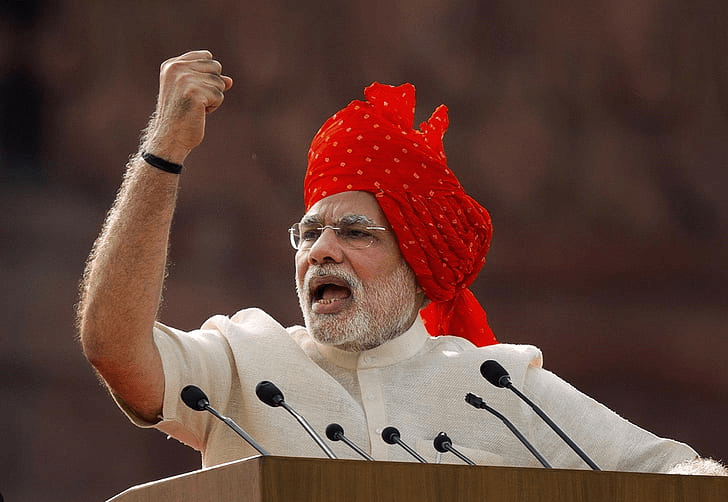
Narendra Modi on the other hand, is seen as a sharp and astute politician who is extremely effective in winning elections and consolidating power, but his approach to politics has drawn criticism that he is not always “gentlemanly” in the traditional sense.
Modi has frequently deployed sharp, often personal attacks on Rahul Gandhi and other political opponents. During the 2014 election campaign, Modi repeatedly referred to Rahul, as shehzada, mocking his lineage and portraying him as out of touch with ordinary people. This kind of political rhetoric, though effective in appealing to the masses, is often seen as a departure from the norms of gentlemanly conduct. Modi’s speeches tend to be combative, and calculated, to create political divides that mobilize his base.
The demonetization policy of 2016, in which high-value currency notes were suddenly withdrawn, was a political masterstroke that framed Modi as a leader fighting against black money and corruption. However, critics argue that the policy was poorly implemented, causing significant hardship to ordinary citizens and disrupting the economy. While demonetization solidified Modi’s image as a strong, decisive leader, it also revealed his willingness to take drastic actions for political gains, even if they caused widespread inconvenience.
Modi is widely acknowledged as a highly skilled and astute politician. He has a strong grasp of electoral politics and uses effective, often populist, strategies to connect with the masses. His 2014 and 2019 victories were landslide successes, showcasing his political acumen in understanding the electorate’s aspirations and leveraging nationalism, development promises, and Hindutva sentiments.
As Chief Minister of Gujarat during the 2002 riots, Narendra Modi faced severe criticism for his handling of the violence. Over 1,000 people, mostly Muslims, were killed in communal violence. While Modi has always maintained that he did everything in his power to control the situation, critics accuse him of failing to act decisively to stop the violence. Internationally, this incident has left a stain on his reputation, with some claiming it shows a lack of empathy and moral leadership. Yet, in Indian electoral politics, this hasn’t damaged his appeal; in fact, it consolidated his image as a strong leader among his core supporters.
Modi is known for his assertiveness and strong-handed approach. His leadership style is marked by centralization of power, decisive decision-making, and at times, controversial moves such as demonetization or the abrogation of Article 370 in Jammu and Kashmir. These actions are often seen as reflecting a politician who is more interested in getting things done than in maintaining a soft or gentlemanly image.
Under Modi’s leadership, there has been a noticeable centralization of power, both within the BJP and in the government. His style of governance is often described as authoritarian, with decisions like the abrogation of Article 370 (which granted special status to Jammu and Kashmir) taken without much consultation. While these decisions have been politically effective, consolidating Modi’s image as a decisive leader, they have also raised concerns about the erosion of democratic norms and federalism. His approach is often seen as prioritizing political gains over gentlemanly adherence to democratic processes.
Modi has been known to use sharp rhetoric, especially against political opponents. He often attacks the Gandhi family, including Rahul, with derisive terms such as “shehzada” (prince) and mocks their perceived entitlement. His political speeches are often combative and aim to galvanize his base through strong nationalistic tones. This creates a perception of him as a politician.
Modi’s political strategy is deeply tied to the promotion of Hindutva, or Hindu nationalism, which has been polarizing. His speeches often invoke themes of nationalism, and his government has pursued policies like the Citizenship Amendment Act (CAA) that critics argue discriminate against Muslims. The 2019 election campaign was also heavily focused on national security and the surgical strikes against Pakistan, framing Modi as the protector of the nation. This strategy has been politically successful but has deepened communal divisions in India. It reflects a politician’s ability to navigate the rough waters of identity politics, often at the cost of inclusivity or harmony willing to play hardball, sometimes at the cost of gentlemanly decorum.
Modi’s tenure has been marked by controversies, particularly surrounding the 2002 Gujarat riots during his tenure as Chief Minister. While he has consistently denied any wrongdoing, this episode still haunts his image globally, with some labelling him as someone, who is more focused on political survival than on being a moral or gentlemanly leader. His response to issues like the Citizenship Amendment Act (CAA) and, farmers’ protests has also been seen as politically calculated but lacking in empathy.
Modi cultivates a persona of strength and decisiveness, often contrasting himself with what he portrays as the weak leadership of Rahul Gandhi and Congress. While this bolsters his image as a leader who can take bold decisions; it also feeds the narrative that he is less interested in diplomacy and more concerned with power politics. This perception aligns with the idea of him being a politician first and foremost.
Modi often portrays himself as a victim of elite conspiracy, frequently using the narrative that he comes from humble beginnings and is being attacked by the Lutyens’ elite. He has said, “I am, a chaiwala, they will never accept me” on numerous occasions, positioning himself as the people’s leader against powerful dynasties like the Gandhis. While this has been an effective political tool, it involves a strategy that keeps personal and emotional issues in the public eye, unlike a more gentlemanly approach of keeping the debate to policies or governance.
Gentleman Versus Politician – Rahul Gandhi Versus Narendra Modi –The Conclusion
Rahul Gandhi is seen as a well-meaning, idealistic figure, polite in debates (hugging Modi in Parliament), focussing on social issues (Nyay scheme), but often perceived as politically inept due to his absences during crucial political moments and his failure to effectively counter aggressive attacks. His reluctance to engage in personal or identity-driven politics, as well as his genteel demeanour, makes him come across as a “gentleman” in a political landscape that demands more aggressiveness.
Narendra Modi is widely recognized for his brilliant political maneuvering and his ability to connect with voters through sharp, sometimes divisive rhetoric (using the term “shehzada” for Rahul). His hard-hitting policies (like demonetization) and handling of sensitive issues (such as the 2002 Gujarat riots and Article 370) highlight his political ruthlessness. His approach has proven highly effective in consolidating power but has raised questions about empathy and inclusiveness, thereby reflecting a politician who prioritizes winning over maintaining a gentlemanly image.
[…] ప్రతిపక్షం యొక్క దృక్పథం […]
[…] మిత్రపక్షాల కారణంగా కాంగ్రెస్ లేదా INDIA కూటమి ఒక ప్రత్యామ్నాయంగా ఏర్పడే […]
[…] Rahul Gandhi, as Leader of the Opposition, has emerged as a stronger challenger post-2024 elections, advocating for inclusivity and social equity, but struggles with perceptions of inexperience and dynastic privilege. Narendra Modi’s is development-oriented with a majoritarian tilt, while Gandhi’s emphasizes secularism and marginalized communities. The “better” leader hinges on alignment with India’s diverse needs and nit personal criteria. […]