
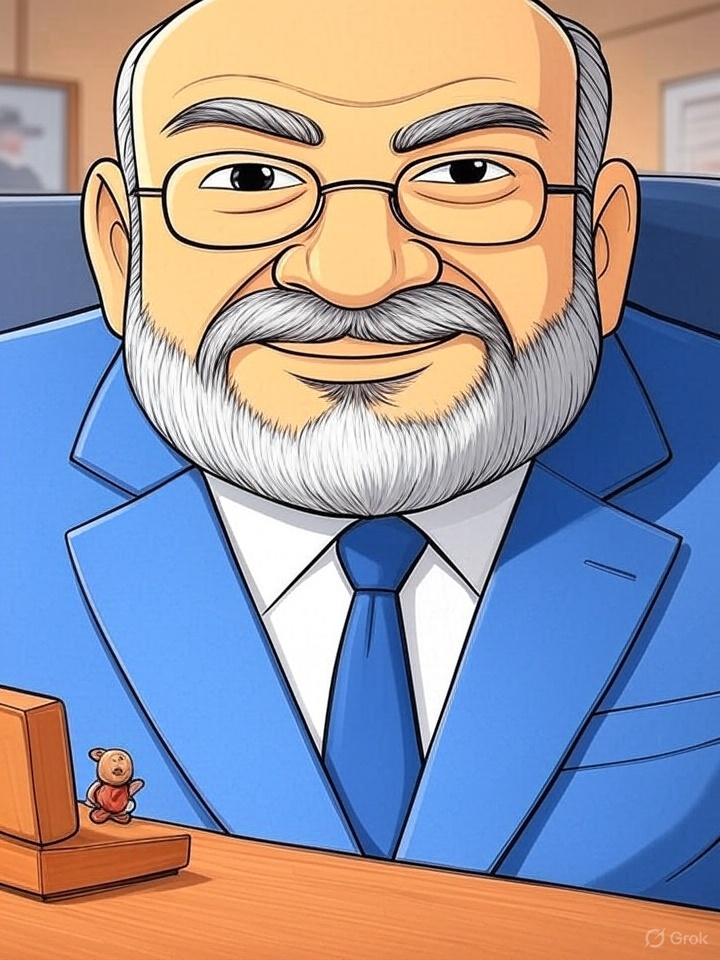
Is Amit Shah a Prime Minister material? Amit Shah is the architect of the Bharatiya Janata Party’s electoral successes since 2014. His planning and micro-level booth management were responsible for the BJP’s unprecedented victories in the 2014 and 2019 Lok Sabha elections in 2014 and more recently Assembly elections in Odisha, Haryana, Maharashtra and Delhi though covertly.
As BJP President between 2014–2020, he expanded the party’s footprint, making it the world’s largest political party with over 10 crore registered members. His ability to forge alliances and mobilize diverse social groups, as seen in Uttar Pradesh with parties like Apna Dal, BLD of Jayant Chowdhary by hook or crook.
As Union Home Minister since 2019 and Minister of Cooperation since 2021, Shah has overseen significant policy decisions. Notably – Abrogation of Article 370 (2019); peace accords in Northeast India; Tackling Left Wing Extremism, with initiatives like ending insurgency in Tripura and settling Bru-Reang refugees. His tenure as a Gujarat minister (2002–2012) under Narendra Modi, handling portfolios like Home, Transport, and Prohibition, showcased his administrative competence but he bogged down in Manipur and Pahalgam.
Shah’s four-decade-long association with Narendra Modi, starting in the 1980s, positions him as a trusted ally. He is branded as the “second-most powerful man.” Shah has never lost an election, winning from Gujarat’s Sarkhej constituency (1997–2007) and Naranpura (2012) as an MLA, and Gandhinagar in the 2019 Lok Sabha.
Sohrabuddin killing and the “Snoopgate”
Shah’s political career is marked by serious allegations, notably the 2010 Central Bureau of Investigation (CBI) charges of kidnapping, extortion, and murder in the Sohrabuddin Sheikh encounter case. He was accused of orchestrating extrajudicial killings, though he was released in 2015, with the CBI court deeming the charges “politically motivated.” The “Snoopgate” scandal (2013) alleged Shah misused state machinery for illegal surveillance, though the case was closed after the complainant requested no investigation.
In 2024, Canada accused Shah of involvement in plots targeting Sikh separatists, which India denied. These allegations, unproven, could damage his international credibility. Such controversies fuel perceptions of Shah as a divisive figure, potentially undermining his ability to unify a diverse nation as Prime Minister.
Amit Shah as a polarizing figure in Indian politics
Shah’s posing has often been criticized for inflaming communal sentiments. For instance, during the 2019 election campaign, he referred to illegal Muslim immigrants as “termites” and promised to “throw them into the Bay of Bengal” through the National Register of Citizens (NRC). This language drew accusations of targeting Muslims, fuelling perceptions of him as a communal figure.
His role in pushing the Citizenship Amendment Act (CAA) in 2019, which grants citizenship to non-Muslim refugees from neighbouring countries, was seen by critics as discriminatory when paired with the NRC
Supporters argue Shah’s actions reflect the BJP’s ideological commitment to Hindu nationalism, which reverberates with a significant voter base. Publicly available information notes Shah’s health challenges, including his COVID-19 diagnosis in 2020, which required hospitalization and raised concerns about his stamina. At 60 years old, Shah is less vigorous public appearances contrast with Modi’s high-energy campaigns and international tours.
Critics describe Shah as a polarizing figure due to his hardline Hindu nationalist stance. Statements like calling Muslim immigrants “termites” or advocating for the National Register of Citizens (NRC) have drawn accusations of targeting minorities. His push for Hindi as a unifying language in 2019 sparked backlash, particularly in non-Hindi-speaking states like Tamil Nadu, highlighting challenges in appealing to India’s linguistic diversity. He was criticized for a “reactive weakling” and blamed him for failures in handling protests (e.g., Shaheen Bagh, Singhu border) and security in Bengal and Kashmir.
Charismatic Leadership image
Unlike Modi, Shah is seen as a behind-the-scenes operator. His personality and focus on strategy over public posing may limit his ability to connect with voters nationwide. Shah’s public outbursts could face resistance from BJP veterans or factions favouring leaders like Nitin Gadkari and Yogi Adityanath, who has a strong public image.
Shah’s alignment with the BJP’s Hindu nationalist agenda strengthens his position within the party but may limit his appeal in a secular democracy. Narendra Modi’s towering presence overshadows potential successors. Shah’s prospects depend on Modi’s exit, which seems unlikely in the near future given Modi’s third term. RSS do not see him as a prospective Prime Minister.
International Charisma and Speaking Faculties
Shah is mainly a strategist, not a public orator. His speeches, often in Hindi and directed to the domestic audiences, lack the flair of Modi’s domestic mimic, globally resonant addresses. Unlike Modi, who projects a statesmanlike image through yoga, global summits, and cultural diplomacy, Shah has a limited international exposure.
His public engagements abroad are rare, with most foreign interactions tied to security or bilateral talks as Home Minister. Shah’s reserved physic contrasts with Modi’s ability to connect with diverse audiences, from world leaders to the Indian’s overseas diaspora. Shah’s limited international exposure may reflect his role as Home Minister, which prioritizes domestic security over foreign policy.
Shah’s lack of Modi’s charisma is a significant hurdle in an era where global leadership increasingly demands public appeal. Modi’s ability to project India as a Vishwaguru (global leader) relies on his personal brand, which Shah may struggle to emulate.
Hesitance to Visit Abroad
Modi craves for extensive international travels—over 100 foreign trips since 2014 through summits, diaspora events, and bilateral deals often resonate with gimmick, mesmerism and image building exercises. Shah by contrast, has limited overseas engagements, primarily for security-related conferences or bilateral talks. In 2024, Canada’s allegations linking Shah to plots against Sikh separatists, which India dismissed, may further discourage high-profile international visits due to diplomatic risks.
Oppression Tactics on Friends and Foes
Shah’s reputation as a ruthless operator stems from allegations of using state power to neutralize opposition. Within the BJP, Shah is known for sidelining rivals to consolidate power. For example, he reportedly de-capacitated the influence of veterans like L.K. Advani and Murli Manohar Joshi, centralizing control under the Modi-Shah duo.
Against political foes, Shah has used agencies like the Enforcement Directorate (ED) and CBI, with critics alleging selective targeting of opposition leaders in West Bengal or Maharashtra. Even allies face Shah’s assertiveness. His push for Hindi in 2019 alienated southern allies like the DMK, and his control over ticket distribution has frustrated state-level BJP leaders and RSS cadres.
Is Amit Shah a Prime Minister material? Narendra Modi vis a vis Amit Shah
Narendra Modi and Amit Shah share a commitment to Hindutva and national strength, but their politics differ in scope, style, and execution. Modi is a self-image builder with mimic, maverick speeches and mesmerisms, blending ideology with developmental plank to appeal the audience. Shah is a hardline strategist, dealing in security, party management, and enforcement, but his polarizing rhetoric, controversial past, and lack of charisma limit his appeal to the BJP’s core base.
Modi as the brain Shah as executioner—have driven the BJP’s dominance, but Shah’s communal image, domestic focus, and controversial tactics make him less suited to replicate Modi’s broad leadership. As a potential Prime Minister, Shah’s strength in governance and strategy would need to overcome his divisive reputation and global inexperience to match Modi’s legacy.
International Implications/Challenges
Allegations like Canada’s 2024 claims, though unproven, could complicate relations with Western nations, requiring Shah to navigate diplomatic fallout. His hardline image may strain ties with Muslim-majority countries, unlike Modi’s strategic outreach (e.g., to UAE or Saudi Arabia).
Shah’s potential as a Prime Minister hinges on whether his strategic acumen and governance record can outweigh his polarizing reputation. In a post-Modi BJP, he is a leading contender, but internal rivals (e.g., Yogi Adityanath or RSS indifference) and public scepticism may complicate his ascendency. To succeed Modi, Shah would need to broaden his appeal, soften his hardline image, and adapt to international demands—tasks that, while challenging, are not impossible given his proven adaptability, Modi would not see these as pre-conditions to declare Shah his successor.
Ideological Foundations
Both Shah and Modi are rooted in the Rastriya Swayamsevak Sangh, the ideological parent of the BJP, which emphasizes Hindutva. Both promote a strong, centralized state to counter separatism and enhance national security, reflecting RSS values of discipline and unity. But the blessings of RSS for both of them are still far away.
Modi frames Hindutva within a narrative of universal development jibe “Sabka Saath, Sabka Vikas” – Together with all, Development for all. His rhetoric often balances cultural nationalism with economic progress, appealing to a wider audience, including urban middle classes and global investors.
Policy Priorities
Modi’s policies blend economic modernization with cultural nationalism. His foreign reach with over 100 foreign trips since 2014, securing deals (e.g., Rafale jets, Quad partnerships, though weakened due to Trumps’s taunt and diaspora support. Modi’s overreach to Muslim-majority nations (e.g., Saudi Arabia, UAE) balances domestic Hindutva with overseas Arab-Muslim appeasement. However, Trump over-shadowed Modi crediting himself as sole harbinger of the Ceasefire between India and Pakistan.
Modi is amplified by his social media presence and global engagements. His yoga imagery and “Mann Ki Baat” elocution, his “Viksit Bharat” slogan visualize progress. Modi distances himself from controversies, letting subordinates like Shah absorb criticism (e.g., CAA and Waqf Board Amendment Act protests).
Is Amit Shah a Prime Minister material? Shah as a “Wounded Tigress”
Shah’s technique often defensive or confrontational, particularly when addressing the criticism or the opposition. For instance, his 2019 “termites” remark about illegal immigrants was a sharp retort to opposition accusations of communalism, escalating tensions rather than defusing them. In response to protests like Shaheen Bagh (2019–2020) over the Citizenship Amendment Act (CAA), Shah’s dismissive tone—calling protesters “anti-national” or blaming opposition conspiracies.
Shah’s reactive approach undermines his ability to unify diverse groups, a critical trait for a Prime Minister. To overcome this, he must adopt a more conciliatory, statesman like pose, engaging critics with dialogue rather than confrontation.
Manipur Violence, Pulwama indifference and Pahalgam mishap
The ethnic conflict between Meiteis and Kuki-Zo communities in Manipur has resulted in over 200 deaths and displaced thousands. Shah’s delayed visit to the state (May 2023, weeks after violence began) and reliance on security deployments rather than political mediation drew criticism. He was blamed for “inaction,” and a “blot on his tenure.” Despite Shah’s claims of restoring peace (e.g., deploying 40,000 security personnel), ongoing violence and failure to broker dialogue between communities highlight governance gaps.
Pahalgam is yet another lapse on the past of Shah. The security lapses in Jammu and Kashmir, led to terror attacks in Anantnag (near Pahalgam) killing 26 pilgrims, raising questions about Shah’s security framework. Shah’s indifference to grant air service CRPF troupe in Pulwama massacre was well known.
The Pahalgam effect
Modi has grabbed opportunity of the terrorist attack in Pahalgam area of Jammu & Kashmir on April 22, 2025 where 22/28 tourists were killed. He has initiated military action Operation Sindoor. He is visiting Bihar again and again to take advantage of the situation to win elections. He has also announced the caste-based census to showcase his winning spree in Bihar.
What Shah Must Overcome
Engage critics through dialogue (e.g., in Manipur) rather than branding them as anti-national; Develop a public posture that inspires trust; soften communal stand; avoid elimination of colleagues; suppression of opposition leaders and demolition of regional parties) a political weedicide.
Enhance public speaking and media engagement to connect with voters. Increase international exposure to build credibility, engaging India’s diplomatic machinery. Delegate divisive tasks to subordinates, preserving a statesmanlike image. Distance himself from past by emphasizing governance and its achievements. Address international allegations transparently to restore credibility.
Is Amit Shah a Prime Minister material? The Conclusion
Amit Shah possesses several qualities that make him a strong contender for Prime Minister – un-matched strategic skills, extensive administrative experience, a proven electoral track record, and proximity to Modi – a Modicide effect.
To become a fine Prime Minister, Shah must overcome his divisive traits unlike Modiocracy by embracing inclusivity, proactive crisis management, and a broader, inspirational person. His administrative experience and electoral acumen make him a strong contender for the post of the Prime Minister
Amit Shah’s image as a “communal frenzy” shoot from polarizing acts and policies like the CAA, NRC and Waqf Board Act which critics argue target minorities. His perceived frailty contrasts with Modi’s vigour, potentially affecting his public appeal – a Modiism effect.
Internationally, Shah’s lack of charisma, limited oratory skills, and hesitance to travel abroad make him a sharp contrast to Modi’s global statesmanship, posing challenges for India’s power. He is a considered as a formidable leader within the BJP, though of late causing inconvenience in the party as well in the RSS.
Amit Shah’s controversies, including his Ambedkar remarks and the Manipur situation, pose challenges to Modi’s government by providing fuel for opposition attacks and risking alienation of specific voter groups.