
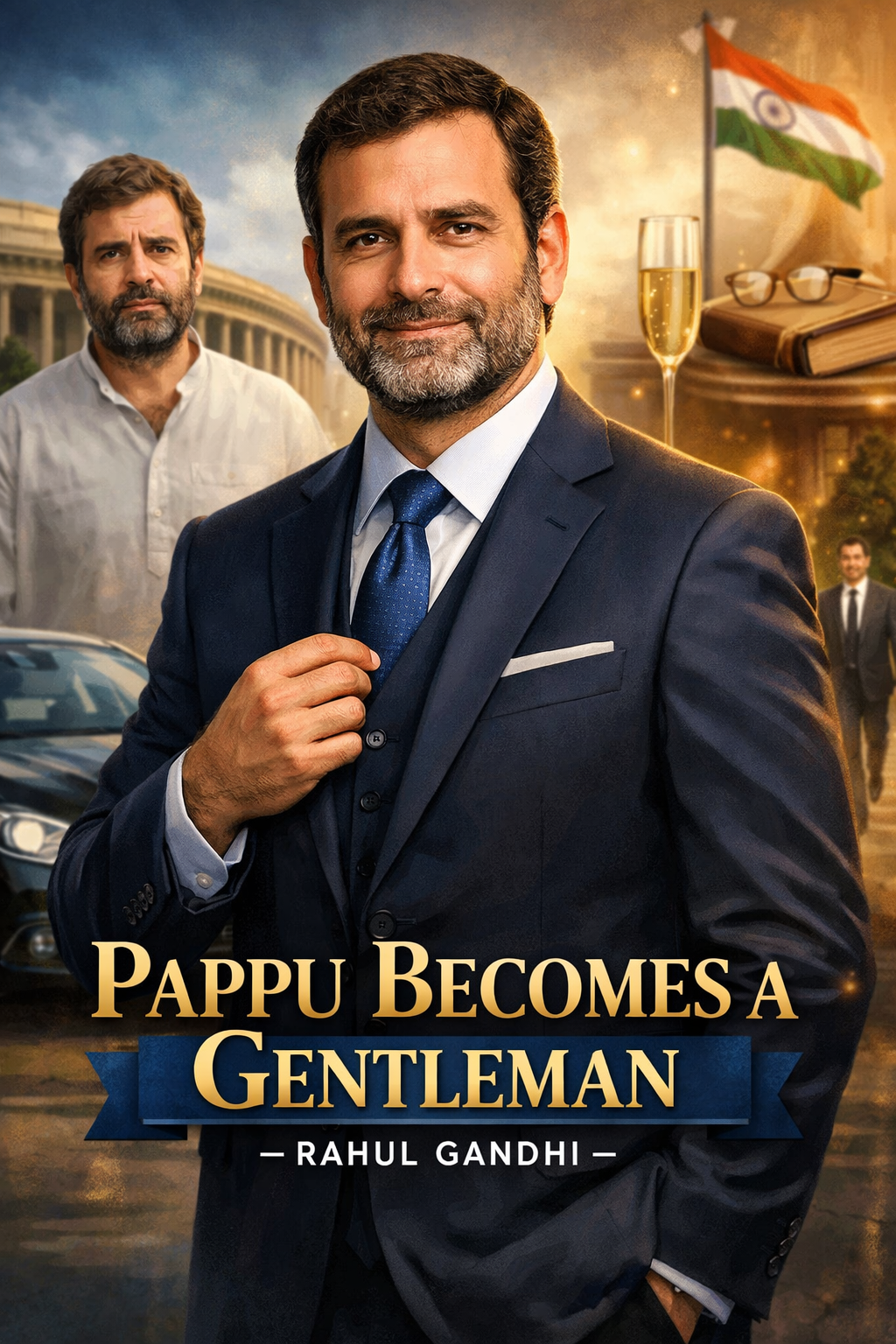
Pappu becomes a gentleman – Rahul Gandhi. Indian political discourse let lose by the Bharatiya Janata Party publicised Rahul Gandhi as an object of ridicule. “Pappu,” the label exemplified through social media campaigns and partisan rhetoric, became a convenient epithet used by cadres of the BJP to portray Rahul as politically a misfit. Yet politics has a way of reshaping reputations over time. However, several developments in the past ten years have gradually changed his public image into that of a more serious opposition leader to the utter bafflement of the duo Narendra Modi and Amit Shah.
Rahul Gandhi’s public posture has undergone a tremendous transformation but heart-braking upheaval to the cadres and higher-ups in the BJP and the RSS. He has been a virulent attacker of fringe as well main forces of both the BJP and RSS. Through parliamentary discourse, issue-based criticism of the government, and people to people initiatives such as the Bharat Jodo Yatra, Rahul has attempted to redefine himself from a caricature of Indian politics into a persistent voice of the Indian public as Leader of Opposition. Rahul Gandhi’s public persona has evolved from that of a hesitant dynastic politician to a persistent opposition leader who has adopted mass-contact politics, ideological messaging, and policy-based criticism of the government.
A Reluctant Politician
After the 2014 electoral defeat, Rahul Gandhi faced internal and external criticism and ridicule to the joy and merry of some of the sleeper cells with in the Congress Party. Yet during this period several changes became perceptibly visible. After the Congress suffered another defeat in the 2019 general elections, Rahul Gandhi resigned as party president. Instead of retreating from politics, he gradually repositioned himself as a policy-focused critic of the government and a star tormentor of Narendra Modi.
Aggressive parliamentary speeches
Rahul Gandhi delivered sharp speeches in Parliament attacking the government on issues like the Rafale fighter jet deal, unemployment, and agrarian distress. In the 2018 No-Confidence Motion, his speech drew national attention and showed a more confident debating style. During a debate he unexpectedly hugged Prime Minister Narendra Modi in Parliament, which became a widely discussed moment portraying him as bold and unconventional. It was ridiculed by Modi as childish and disgusting behaviour reminiscent to his Pappu image. But Rahul was unapologetic and un deterred. He was also detested by his own senior partymen aligned the gang of the senior Congressmen like Ghulam Nabi Azad, Manish Tiwari, P. Chidambaram, Anand Sharma and now Sashi Tharoor.
As Congress President, he led the party to an unexpected victory in three major state elections in 2018 (Rajasthan, Madhya Pradesh, and Chhattisgarh), indicating improved political strategy. This phase marked a shift from a hesitant leader to a more visible and combative opposition figure.
Pappu becomes a gentleman – Rahul Gandhi – Issue-Based Politics and Social Media Repositioning
After the 2019 Lok Sabha defeat, Rahul Gandhi began focusing on issue-based politics rather than personality politics. Support to farmers during the Farm Laws protests (2020–21). He participated in tractor rallies and consistently raised farmers’ issues and deal the American agricultural produce as compromise. Repeatedly questioned the government on unemployment, GST, demonetization impacts, Operation Sindhoor ceasefire as surrender He held policy discussions with economists and experts online about pandemic management and economic recovery.
His politics shifted toward policy debates and economic critique, enhancing credibility among analysts. He also became a vocal supporter of the farmers’ protests against the three agricultural laws in 2020–21, participating in rallies and highlighting the concerns of rural communities. This phase marked a transition from personality-driven politics to issue-cantered political engagement.
Pappu becomes a gentleman – Rahul Gandhi -Bharat Jodo Yatra (2022–2023): Image Transformation
The Bharat Jodo Yatra became the most visible turning point in Rahul Gandhi’s political image. Walked about 4,300 km from Kanyakumari to Kashmir over 145 days. Interacted with thousands of citizens, activists, and intellectuals during the journey. Gandhi himself said the march made him more patient and a better listener as the Yatra helped him in transformation politically.
Rebranded his image as a grassroots leader rather than a dynastic politician, Rahul Gandhi increased direct interaction with citizens and workers. Attracted participation from public figures, former military leaders, and economists. Political analysts widely view this yatra as the moment his public perception began to change.
Rahul Gandhi followed the earlier march with another campaign called the Bharat Jodo Nyay Yatra in 2024. Unlike earlier criticisms that he was disconnected from ground realities, these yatras helped him develop sustained engagement with different social groups, including farmers, gig-economy workers, students, and tribal communities.
It reintroduced Rahul Gandhi to the public as a grassroots political campaigner rather than an elite leader. Thousands of ordinary citizens, activists, and civil society groups interacted with him during the journey. The march created a powerful visual narrative of endurance and commitment. For many observers, this was the moment when the earlier caricature of “Pappu” began to collapse.
Bharat Jodo Nyay Yatra and Mass Contact Politics (2024)
In 2024, Rahul Gandhi launched the Bharat Jodo Nyay Yatra, focusing on justice and economic inequality. Rahul met gig workers, farmers, and youth during the journey. He raised issues like caste census, unemployment, and social justice. He increased his grassroots engagement and social media outreach. That demonstrated sustained mass-contact politics, which earlier critics claimed he had lacked.
Pappu becomes a gentleman – Rahul Gandhi – Role in the 2024 Lok Sabha Elections and Opposition Politics
The 2024 general elections further reinforced his evolving role. After the election, Rahul Gandhi became the Leader of Opposition, a constitutional position that had been vacant since 2014. Played a major role in building the INDIA opposition coalition, bringing together multiple regional parties. Congress significantly increased its seats compared with previous elections, strengthening opposition politics.
After the 2024 Lok Sabha elections, Rahul Gandhi assumed the role of Leader of Opposition in Parliament. This position had remained vacant since 2014 because no opposition party had enough seats to claim it. In this role he has coordinated opposition parties within the INDIA Alliance, sharpened parliamentary scrutiny of government policies, revived the Congress party’s role in national political debate. His speeches in Parliament have become more structured, data-driven, and policy-focused, reflecting a more mature political style.
Pappu becomes a gentleman – Rahul Gandhi – The Conclusion
The phrase “Pappu becomes a gentleman” reflects a political narrative of transformation, supported by several developments. Improved parliamentary performance and debate skills (2017 onward) shift toward issue-based politics and policy discussions. It symbolized a broader shift in Indian political perception. Over the past decade Rahul Gandhi has moved through several phases. Ridicule and marginalization to the emerging parliamentary assertiveness (2017–2019), issue-based political engagement (2019–2021) and mass-contact leadership through nationwide marches (2022–2024).
Whether one agrees with Rahul Gandhi’s ideology or not, the trajectory of the last ten years suggests that Rahul has gradually evolved into a more serious and persistent political actor in India’s democratic landscape. Rahul proved that in politics, reputations are rarely permanent. They change with persistence, public engagement, and political experience. The story of Rahul Gandhi over the last decade illustrates how a politician once dismissed as a caricature can redefine his place in national politics.
Once dismissed by critics as politically inadequate, Rahul has gradually repositioned himself through parliamentary interventions, grassroots campaigns, and national marches such as the Bharat Jodo Yatra. Whether this transformation will ultimately translate into electoral success remains uncertain. Yet one conclusion is difficult to ignore the caricature that once defined him no longer captures the full reality of his role in contemporary Indian politics.