
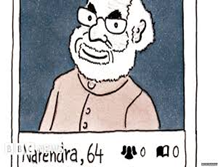
The Modi government was initially not in favour of conducting a caste-based census. While the decadal census includes data on Scheduled Castes (SCs) and Scheduled Tribes (STs), other caste data has not been collected since 1931. The government’s stance was that gathering detailed caste information might lead to social and administrative complexities and further deepen caste-based divisions.
However, due to growing demands from various political parties, particularly in states like Bihar, Uttar Pradesh, and Maharashtra, and the results of the Bihar caste survey in 2023, the Modi government appeared to reconsider its stand. Political pressure from opposition parties advocating for a caste census and calls for addressing socio-economic disparities have led to an acknowledgment of the issue. Some Bhartiya Janata Party (BJP) leaders have shown openness to discussing caste-based data, indicating a potential policy shift.
The dilemma of Narendra Modi on caste-based census – Stay by the High Court of Bihar
The Bihar Government initiated a caste-based survey in 2023, aiming to collect socio-economic data for implementing targeted welfare measures. However, this survey was challenged in the Patna High Court, resulting in a temporary stay on its implementation.
Petitioners argued that the survey violated citizens’ privacy rights, as collecting caste-based data on individuals could potentially lead to misuse or discrimination. The right to privacy, recognized as a fundamental right by the Supreme Court in the landmark Puttaswamy case (2017), was cited as a basis for challenging the survey.
There was a debate over whether the state government had the legislative competence to conduct such a survey. The petitioners contended that the power to conduct nationwide censuses and surveys primarily rests with the Union Government as per the Constitution. Therefore, they argued, the state government’s caste survey was beyond its jurisdiction.
After reviewing these concerns, the Patna High Court stayed the survey in May 2023. However, in August 2023, the High Court lifted the stay and upheld the state government’s right to conduct the survey, arguing that the state’s efforts to collect data for welfare purposes were within its constitutional rights.
After the High Court’s decision, opponents of the survey appealed to the Supreme Court of India, questioning the legality and constitutionality of such a caste-based survey. As of now, the Supreme Court has not delivered a final verdict on the issue, but the appeal reflects ongoing concerns about caste-based reservations and their implementation in India. The Supreme Court’s decision will be crucial as it might set a precedent for other states considering similar surveys.
The dilemma of Narendra Modi on caste-based census – Why Tamil Nadu’s Reservation Above 50% Was Allowed
Tamil Nadu is unique in having a reservation system that exceeds the 50% cap set by the Supreme Court. The reasons for its allowance can be traced to the historical and legal developments specific to the state.
Tamil Nadu has a long history of affirmative action policies aimed at addressing the socio-economic disparities of marginalized communities. Even before independence, caste-based reservation policies were a crucial part of Tamil Nadu’s social justice framework.
In the Indra Sawhney v. Union of India (1992) case, also known as the Mandal Commission case, the Supreme Court ruled that reservations in public employment and education should generally not exceed 50%. However, the court also acknowledged that “extraordinary circumstances” could justify breaching this limit.
In 1994, Tamil Nadu enacted the Tamil Nadu Backward Classes, Scheduled Castes, and Scheduled Tribes (Reservation of Seats in Educational Institutions and of Appointments or Posts in the Services under the State) Act, providing for 69% reservations. To protect this legislation from judicial scrutiny and ensure its constitutionality, the state government sought its inclusion in the 9th Schedule of the Constitution.
Laws included in the 9th Schedule are generally immune from judicial review, especially concerning fundamental rights violations. The Tamil Nadu reservation law was added to the 9th Schedule, thereby securing its implementation even though it exceeded the 50% cap. This special status was a crucial reason why Tamil Nadu could maintain its higher reservation percentage.
However, it’s important to note that the Supreme Court in the I.R. Coelho v. State of Tamil Nadu (2007) ruling stated that laws in the 9th Schedule are not entirely beyond judicial review if they violate the basic structure of the Constitution. This ruling added a layer of complexity, indicating that even 9th Schedule laws could be challenged under certain circumstances.
The dilemma of Narendra Modi on caste-based census – The 9th Schedule of the Constitution
The 9th Schedule of the Indian Constitution was introduced by the First Amendment in 1951 to protect certain laws from judicial review, particularly land reform laws, ensuring that they cannot be challenged in courts for violating fundamental rights. Over time, various states have demanded the inclusion of reservation-related laws in the 9th Schedule to safeguard them from legal challenges.
Ensuring that reservation policies, especially those expanding beyond the 50% limit as per the Supreme Court’s ruling in the Indra Sawhney case (1992), are immune from judicial review. As states enact new reservation policies or implement changes (like those based on caste surveys), there is a push to protect these policies from being overturned by courts.
In the context of Bihar, the demand to include the state’s reservation policies in the 9th Schedule arises from concerns that caste-based surveys or new reservation rules may face legal hurdles. If these policies are included in the 9th Schedule, they would be beyond the scrutiny of courts, thereby solidifying their implementation.
The dilemma of Narendra Modi on caste-based census – The legal status and the demands of the Government of Bihar
The Government of Bihar, led by Chief Minister Nitish Kumar, has been vocal in demanding a caste census. Nitish Kumar’s government argues that a comprehensive caste census will help in identifying the socio-economic conditions of different caste groups, which in turn could lead to better policy formulation and more targeted welfare schemes. Here’s a breakdown of Bihar’s stance:
The state government initiated its caste census in 2023 after the central government declined to conduct one. This exercise was termed a “socio-economic survey,” and the Bihar government justified it by saying that it was necessary to ensure social justice.
Nitish Kumar, along with leaders from other political parties in Bihar (including opposition leader Tejashwi Yadav), has repeatedly urged the central government to conduct a nationwide caste census. They argue that it would provide an updated database for implementing reservation policies and assessing the needs of disadvantaged communities.
For Bihar’s coalition government of the Janata Dal (United) and Rastriya Janata Dal (RJD), caste-based politics plays a significant role. A caste census could shift political dynamics by ensuring a more nuanced understanding of the population distribution of backward castes, Dalits, and other marginalized groups.
The central government, led by the BJP, has thus far been reluctant to conduct a caste census at the national level, citing various reasons, including complexities involved in collecting such data. However, it has agreed to the 10% reservation for Economically Weaker Sections (EWS), which was implemented without a caste basis.
The dilemma of Narendra Modi on caste-based census – The actions by Other Opposition Government States
Chhattisgarh
The Chhattisgarh government has supported the idea of a caste census. Chief Minister Bhupesh Baghel has consistently argued that understanding the socio-economic realities of caste groups is vital for equitable development and the proper allocation of resources. The Congress party at the national level has largely backed the demand for a caste census.
Tamil Nadu
The DMK, which holds power in Tamil Nadu, has also pushed for a caste census. Chief Minister M.K. Stalin has since argued that such a census would help in ensuring proportional representation and distribution of benefits to the backward and marginalized classes. The demand aligns with Tamil Nadu’s long-standing focus on social justice and affirmative action policies.
Maharashtra
Before the change in government, the Maharashtra coalition led by the Shiv Sena, Congress, and NCP had demanded a caste-based census, especially in the context of the Maratha reservation issue. The data from such a census would have been crucial for determining the socio-economic status of various communities like the Marathas and ensuring that reservations were extended appropriately.
Jharkhand
The Jharkhand Mukti Morcha (JMM) government, led by Chief Minister Hemant Soren, has been vocal in its support for a caste census. Jharkhand has a significant population of Scheduled Tribes, OBCs, and other marginalized groups, and the government has argued that better data is essential for formulating effective policies for these communities.
The dilemma of Narendra Modi on caste-based census- The National Political Context.
National opposition parties like the Congress, the Samajwadi Party (SP), and the RJD have all supported the demand for a caste census. They argue that the absence of such data hampers the implementation of policies aimed at social justice.
The BJP-led central government has been cautious on the issue. While it has avoided directly rejecting the demand, it has cited administrative and logistical challenges in conducting a caste-based census. The party is seen to be wary of the political ramifications, as it could lead to demands for increased reservations and caste-based politics.
Legal and Constitutional Issues
India conducted its last full caste census in 1931. The post-independence censuses have collected data only on Scheduled Castes and Scheduled Tribes. Other backward classes (OBCs) and castes have not been included. Although the SECC 2011 did collect some caste-based data, the government has not officially released the caste data. There have been calls from various quarters to make this data public.
The dilemma of Narendra Modi on caste-based census – The Sum-up
The demand for a caste census, led prominently by Bihar, has become a rallying point for many opposition parties and state governments. They argue that a caste-based census is crucial for the proper implementation of welfare schemes and reservations. However, the central government has been reluctant, and this disagreement is set to continue as a major point of contention in Indian politics.
The issue of a caste-based census has been a contentious topic in Indian politics. In recent years, particularly since the 2021 census was postponed due to the COVID-19 pandemic, several state governments, especially opposition-led ones, have pushed for the inclusion of caste data in the national census. Let me address the situation in Bihar and actions taken by other opposition-led states.
The reservation policies based on caste have been a contentious issue in India, often encountering legal challenges. The Patna High Court initially stayed the Bihar caste survey due to privacy concerns and questions of jurisdiction but later allowed it, highlighting the state’s right to collect data for welfare. Tamil Nadu’s reservations exceeding 50% were allowed primarily due to historical practices, legal backing, and the state’s action to include the law in the 9th Schedule, thus making it less susceptible to judicial challenges.
The Bihar High Court’s verdict and the subsequent appeal in the Supreme Court, as well as the demand for inclusion of reservations in the 9th Schedule of the Indian Constitution, revolve around the complexities of caste-based reservations in India.
The Bihar High Court upheld the state’s right to conduct a caste-based survey, a decision challenged in the Supreme Court. Amidst ongoing debates on caste-based reservations, there is a growing demand to include such reservations in the 9th Schedule of the Indian Constitution to shield them from judicial scrutiny and secure their implementation.
[…] of the war. The Indian Muslims might be pleased at his gesture to soft corner him in the next Bihar elections and Modi would be benefitted from the thrash he had received with the Wakf Board Amendment Act, may […]