
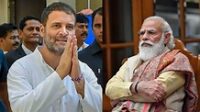
Unique Selling Proposition (USP) is a marketing concept used to highlight a unique feature or benefit that sets a product or service apart from its competitors. In the context of the Indian political system, a party or candidate’s USP refers to the distinguishing characteristics or key messages that make them stand out from other political players.
Political parties in India, such as the BJP, Congress, AAP, or regional parties like TMC, BSP, and DMK, often emphasize unique aspects of their leadership, ideology, or policy focus to create a distinct identity. The BJP’s USP centres around Hindutva and a strong nationalist agenda. The Congress emphasizes secularism and social justice. The Aam Aadmi Party (AAP) built its identity around anti-corruption and good governance.
A well-crafted USP helps parties or candidates connect emotionally with voters. Narendra Modi’s image as a Vikas Purush (development incarnation) is a strong USP, portraying him as a leader focused on development and economic growth. Similarly, Mamata Banerjee’s portrayal as being the Bengal Tigress connects with Bengali pride and identity.
Political campaigns leverage USPs to promote their candidates during elections. This includes slogans, manifesto promises, or personal traits. A powerful example is BJP’s Sabka Saath, Sabka Vikas (inclusive development) slogan, positioning the party as working for all sections of society.
Parties often develop a USP for specific voter segments. For instance, regional parties like TRS in Telangana or Shiv Sena in Maharashtra position themselves as champions of regional pride and local development, while parties like the BSP have built their USP around Dalit empowerment.
A strong USP gives a political party a competitive edge by distinguishing its approach, policies, and leadership from rivals. For example, Arvind Kejriwal’s image as an aam aadmi (common man) has helped AAP compete against traditional political elites.
In Indian politics, perception is crucial. A USP is often used to highlight the clean image of a candidate, a party’s grassroots connection, or its ability to address specific challenges. For example, Nitish Kumar in Bihar has long been associated with good governance and law and order, which has become his political USP.
Narendra Modi’s USP is economic development, nationalism, and strong leadership; Rahul Gandhi’s USP is youthful leader, pro-poor; secular; Arvind Kejriwal’s USP is Common man’s leader, anti-corruption, efficient governance, and Mamata Banerjee’s USP is championing the cause of Bengal’s pride, grassroots leader.
The Politics of USP: The unprecedented case of India’s democracy since 2014 – Modi’s rise, and the evolution of his USP
Narendra Modi joined the RSS in his youth and spent many years as a pracharak. His dedication to the RSS’s nationalist and Hindutva ideology laid the foundation of his political identity. His USP at this stage was his organizational skills and deep ideological grounding in the Hindutva philosophy.
Modi’s disciplined life, loyalty to the cause, and experience in grassroots organization strengthened his political base in Gujarat, where he later joined the BJP and quickly rose through the ranks.
Modi’s tenure as Chief Minister of Gujarat gained international attention due to the 2002 Gujarat riots, but he shifted focus to economic development. His administration promoted Vibrant Gujarat, showcasing Gujarat’s industrial growth and infrastructure development. This earned him the title of a pro-development leader.
Modi marketed himself as a leader focused on economic growth, job creation, and modernizing Gujarat. His decisive leadership and non-corrupt image set him apart, appealing to both business leaders and the common man. Modi’s success in Gujarat propelled him onto the national stage, where he was seen as a strong, dynamic leader who could transform India with similar reforms.
In 2014, Modi’s campaign was built around the promise of Acche Din (good days), vowing to rejuvenate the Indian economy, create jobs, and root out corruption. He presented himself as a leader of the masses and the antithesis of the Congress leadership, portraying them as out of touch and corrupt.
Modi’s USP in 2014 was his image as a self-made man from humble beginnings, committed to India’s development. His promise of inclusive growth resonated with millions who saw him as a decisive leader capable of transforming the country. Modi’s charismatic personality, pro-business image, and the perception of him as a strong and incorruptible leader led to a sweeping victory for the BJP in 2014, making him Prime Minister of India.
The Politics of USP: The unprecedented case of India’s democracy since 2014 – Challenges and decline of Modi’s USP in the last decade
While Modi’s USP remained strong during his initial years in office, several factors have contributed to a perceived decline over the past decade. Modi’s promise of creating jobs and reviving the economy faced setbacks. Despite initial enthusiasm, unemployment rates have risen, and GDP growth has been inconsistent.
Demonetization (2016), intended to root out black money, was seen as a failed experiment by many, causing disruptions to small businesses and the informal sector. Protests by farmers, culminating in the 2020-2021 farmers’ protests, damaged Modi’s image among rural voters. The inability to adequately address these concerns has chipped away at his development-oriented USP.
The Politics of USP: The unprecedented case of India’s democracy since – Authoritarian and centralized leadership style
Modi’s leadership style, seen as centralized and authoritarian, has led to a perception of eroding democratic institutions. Critics argue that important decisions, such as demonetization and the handling of the COVID-19 pandemic, were made without sufficient consultation with experts or opposition leaders.
Modi’s tenure has witnessed criticism for the undermining of key institutions, such as the judiciary, media, and the Election Commission. His opponents accuse him of using majoritarian politics to push through controversial decisions, such as the revocation of Article 370 in Kashmir and Citizenship Amendment Act (CAA), which caused national protests.
Communal polarization and the Hindutva agenda
While Modi has maintained his appeal to a large section of the Hindutva voter base, his government has been criticized for encouraging communal polarization. Incidents such as the anti-Muslim riots in Delhi (2020) and lynchings in the name of cow protection have tarnished his inclusive image.
Modi’s shift towards Hindutva rhetoric, and the promotion of policies perceived to be biased against minorities, have alienated sections of society, especially Muslims, liberals, and intellectuals.
The COVID-19 Pandemic: Management and fallout
Modi’s USP as a strong leader took a major hit during the second wave of COVID-19 in 2021, when India faced a severe crisis of oxygen shortages, overwhelmed hospitals, and high mortality rates
Modi was criticized for focusing more on election campaigns than on managing the health crisis. The rollout of the vaccination program, although eventually successful, faced early challenges, leading to frustration and a perceived lack of preparedness.
The Opposition’s Resurgence and criticism of Modi’s persona
Opposition parties, including the Congress under Rahul Gandhi, and regional players like Mamata Banerjee, have actively critiqued Modi’s policies, pointing to rising unemployment, inflation, and the perceived weakening of democratic norms.
Modi’s USP of decisiveness is now often portrayed by critics as autocratic. His ability to control the narrative has faced resistance, particularly in states where the BJP has lost elections of West Bengal in 2021.
Inflation and Rising Living Costs
Despite being a champion of economic growth, the steep rise in fuel prices, inflation, and high cost of living have become significant issues for ordinary citizens. This has contributed to dissatisfaction among large sections of the population.
The Politics of USP: The unprecedented case of India’s democracy since 2014 – the 2024 status of Modi’s USP
Modi remains a formidable figure in Indian politics, with a loyal voter base and continued influence. However, the initial aura of invincibility and the USP as a transformative leader have weakened in certain areas due to economic challenges, social unrest, and criticism of his authoritarian style. The Modi of 2024 is still seen as a strong nationalist leader, but his promise of good days has not materialized fully, leading to disillusionment among some segments of voters. His Hindutva and nationalist USP remains strong, but his image as a development-oriented reformer has faced significant erosion over the last decade.
Over the last decade, Rahul Gandhi has undergone a significant transformation in terms of his public image and political appeal. From being mockingly labelled as Pappu – a term used to deride him as politically naïve and ineffective – he has emerged as a more formidable political leader in Indian politics. This change in his Unique Selling Proposition (USP) has been a result of his evolving political strategy, increasing visibility, and consistent opposition to the ruling party.
The Politics of USP: The unprecedented case of India’s democracy since 2014 – the early perception – the Pappu Image and weak leadership of Rahul Gandhi
Rahul Gandhi was initially seen as someone who rose through the ranks because of his family legacy rather than merit. His association with the Nehru-Gandhi dynasty cast him as the dynast, disconnected from the ground realities of Indian politics.
His political debut was often criticized for being a hesitant politician, and a lack of assertiveness. In speeches and interviews, his lack of clarity and command over political issues made him an easy target for mockery.
Despite multiple attempts, Rahul Gandhi failed to deliver electoral victories for Congress. His perceived inability to articulate a coherent political vision, and the Congress’s performance in the 2014 general elections only cemented this perception of ineffectiveness.
The Politics of USP: The unprecedented case of India’s democracy since 2014 – Evolution of Rahul Gandhi’s USP
After the crushing defeat in 2014, Rahul Gandhi took a more hands-on approach to Indian politics, increasing his public appearances, engaging directly with voters, and consistently challenging Prime Minister Narendra Modi’s policies. His consistent presence in parliamentary debates and campaigns helped build his credibility as an engaged leader.
He embarked on multiple public outreach campaigns, such as the Kisan Yatra, Bharat Jodo Yatra, and Bharat Jodo Nyay Yatra. These grassroots efforts to connect with farmers, workers, and marginalized sections of the society, helped him shed the image of being a privileged outsider, and gave him a more down-to-earth, relatable appeal.
The Politics of USP: The unprecedented case of India’s democracy since 2014 -Chowkidar chor hai slogan
Rahul began to position himself as the primary challenger to Modi. The 2019 campaign slogan Chowkidar Chor Hai (The watchman is a robber) was an aggressive move aimed at tarnishing Modi’s reputation for integrity, particularly over the Rafale deal and allegations of corruption. While the Congress did not win the 2019 elections, Rahul’s approach marked a clear shift toward a more combative, assertive leader who was daring to take on the BJP head-on.
Rahul worked to unite various opposition parties against the BJP, positioning himself as a leader of the broader opposition front. His efforts to reach out to regional leaders like Mamata Banerjee, Akhilesh Yadav, and Stalin have showcased his flexibility and willingness to form the INDIA Front, a shift from his earlier insular approach.
The Politics of USP: The unprecedented case of India’s democracy since 2014 – focus on policy and vision
Over the years, Rahul has focused more on presenting himself as a serious political thinker. He has consistently raised concerns about issues like farmers’ distress, unemployment, and social inequality, positioning Congress as a party that fights for the poor, farmers, and middle class.
Rahul has also strongly critiqued the Modi government on economic issues, including the mishandling of demonetization, the GST rollout, and the COVID-19 crisis. By offering more pointed critiques of these policies, he has shifted from being seen as reactive to proactive in addressing India’s economic challenges.
The Politics of USP: The unprecedented case of India’s democracy since 2014 – Inclusive and secular politics
Rahul Gandhi has bounced into Congress’s legacy of secularism and inclusivity, often speaking out against the divisive politics of the BJP and their perceived Hindutva agenda. He has framed himself as a defender of the Constitution and an advocate for minorities, placing Congress as a counterforce to the BJP’s majoritarian approach.
Rahul Gandhi’s Bharat Jodo Yatra was aimed at countering the divisive rhetoric by promoting unity across religious and caste lines, invoking the values of pluralism and diversity. This helped in reshaping his image as a unifier of the nation and opposed to divisiveness of communal politics.
The Politics of USP: The unprecedented case of India’s democracy since 2014 -Shift in leadership style and public perception
Rahul’s self-deprecating psych and ability to laugh off the pappu label in interviews have helped soften his image. His attempts to engage directly with the public, whether through social media or public appearance and mingling with common folk have created an image of him as a humble leader, open to feedback and learning from his mistakes.
Gandhi’s ability to engage in more serious discussions on critical issues like foreign policy, economics, and governance, especially in public forums and press conferences, indicates a growing maturity in his leadership. His tone has become more measured, and his criticisms
The Politics of USP: The unprecedented case of India’s democracy since 2014 – from Pappu to a formidable opposition leader
Rahul Gandhi now markets himself as a defender of democratic values, frequently warning about the erosion of democratic institutions under BJP rule. His Save the Constitution campaigns and appeals to judicial independence resonate with those concerned about rising authoritarianism.
His Bharat Jodo Yatra has helped rehabilitate his image by presenting him as a man of the people, willing to walk alongside them and hear their grievances. This journey was symbolic of his desire to bridge divides in Indian society, focusing on unity, social justice, and national integrity.
Unlike the previously constructed image of a politically aloof, dynastic heir, Rahul Gandhi has evolved into a leader who seems genuine, empathetic, and approachable. His humility in admitting personal and party failures has won him some admiration and increased trust, especially among younger and educated voters.
Rahul Gandhi has become sharper in his criticisms of the BJP and Modi’s governance, consistently highlighting economic inequality, inflation, and the plight of the unemployed youth. His positioning as the voice of dissent against the government’s failings has reshaped his USP from an out-of-touch politician to an indispensable leader of the opposition.
The Politics of USP: The unprecedented case of India’s democracy since 2914 – The Conclusion
Modi remains a formidable figure in Indian politics, with a loyal voter base and continued influence. However, the initial aura of invincibility and the USP as a transformative leader have weakened in certain areas due to economic challenges, social unrest, and criticism of his authoritarian style.
Rahul Gandhi’s USP has transformed from a mocked, immature leader to a resilient, thoughtful, and empathetic opposition leader. While he still faces challenges in terms of electoral victories, his evolving leadership style, consistent critique of the Modi government, and its ground-level campaigns have reshaped public perception. His new image is that of a leader who is not only willing to fight for India’s democratic values but also deeply connected to the struggles of its people.
[…] यूनीक सेलिंग प्रोपोज़िशन (USP) एक मार्के…, जिसका उपयोग किसी उत्पाद या सेवा की उस अनोखी विशेषता या लाभ को उजागर करने के लिए किया जाता है जो उसे अपने प्रतिस्पर्धियों से अलग बनाती है। भारतीय राजनीतिक प्रणाली के संदर्भ में, किसी पार्टी या उम्मीदवार का यूएसपी उन विशेषताओं या प्रमुख संदेशों को दर्शाता है जो उन्हें अन्य राजनीतिक खिलाड़ियों से अलग बनाते हैं। […]
[…] announcement of the Modi government of the caste-based census in the midst of the terrorist turmoil raises doubts about the lack seriousness of the attack. […]