
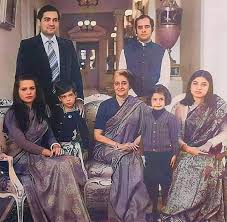
A tolerant Gandhis under attack but they continue to be best. The article a tolerant Gandhi’s insights the tolerant levels of the Gandhi Family. The ideology of a rebellious trio of Congress stalwarts – Lala Lajpat Rai, Bal Gangadhar Tilak, and Bipin Chandra Pal, collectively known as Lal, Bal, and Pal, sowed the seeds of the Rastriya Swayamsevak Sangh (RSS) on the historic date of September 27, 1925, under the guidance of Keshav Baliram Hedgewar in Nagpur.
Hedgewar, a political protégé of B. S. Moonje, himself a devoted follower of Bal Gangadhar Tilak, a prominent Hindu Mahasabha leader, and a committed social activist hailing from Nagpur, laid the foundation of an organization that would harbour stiff opposition against the Congress.
This sentiment has remained steadfast within the RSS over the years. During this era, Mahatma Gandhi’s prominence within the Congress and the Government of India was unassailable, leaving no political force with the strength to challenge it.
However, as history has shown, nothing in the political landscape is eternal, and the Congress, despite its seemingly unbreakable monopoly, would eventually face formidable challengers, with figures like Jayaprakash Narayan, the emergence of the Janata Party, and later the rise of the Bhartiya Janata Party (BJP) heralding new dynamics in Indian politics. A tolerant lot Gandhis’ – Indira Gandhi, the iron lady of India
A tolerant lot Gandhis’ under attack but they continue to be best – Indira Gandhi, the iron lady of India
A tolerant Gandhis under attack but they continue to be best. A first of the tolerant lot Gandhis, Indira Gandhi, daughter of Pandit Jawaharlal Nehru, the first Prime Minister of India was found herself as the initial focal point of political attacks.
Indira Gandhi faced constant scrutiny and ultimately, the Allahabad High Court removed her from office due to her involvement in electoral malpractices. However, her conviction was overturned by the Supreme Court of India on November 7, 1976.
The period of unrest during this time prompted the declaration of a state of emergency on June 25, 1975. Subsequently, in the 1977 elections, the Congress party lost, and the Janata Party assumed power. The landscape of power is ever-changing and dynamic, never remaining stagnant.
In 1980, Indira Gandhi made a triumphant return to power and continued to lead the government until her tragic assassination in 1984. During these turbulent times, her opponents were envious, while her supporters endured hardship. This marked the end of an era, and for a brief moment, the trend of intolerance was paused.
In the wake of the tragic Sikh bloodshed, masquerading as the assassination of Indira Gandhi, Rajiv Gandhi ascended to the prestigious position of Prime Minister of India, despite the discontentment of the intolerance brigade.
His meteoric rise to power was propelled by a unique blend of sympathy and his inherently empathetic nature, catapulting his party to an astounding majority in the parliamentary elections, securing a staggering 411 out of 542 seats.
A tolerant lot Gandhis’ – Rajiv Gandhi Era
A tolerant Gandhis under attack but they continue to be best. Rajiv Gandhi’s tenure at the helm ushered in, a wave of transformative changes, beginning with an overhaul of ministerial nomenclature. He spearheaded the advancement of computerization and information technology, recognizing their pivotal role in the country’s progress.
His legacy is intricately woven with the tapestry of monumental reforms, notably the 73rd and 74th Constitutional Amendments, which empowered Panchayati Raj institutions and Gram Panchayats.
He orchestrated the liberation of the Maldives from the clutches of LTTE invasion, an act that drew the ire of the militant organization. Rajiv Gandhi also played a pivotal role in the historic unlocking of the Ram Mandir doors and the reversal of the Shah Bano verdict.
However, his administration was not without its share of challenges and controversies. The Bofors scandal, uncovered by his own senior colleague VP Singh, tarnished his government’s reputation. Sending the Indian Peace Keeping Force to Sri Lanka further divided opinions, while the Bhopal Gas Tragedy and the volatile situation in Jammu and Kashmir added complexities to his leadership.
Rajiv Gandhi found himself under attack from both within his own party and the opposition, ultimately leading to his defeat in the 1989 elections. Tragically, his downfall reached its nadir when LTTE suicide bombers, in a heinous act of terrorism, reduced him to mere remnants on that fateful day, the 21st of May, 1991.
The darling of the Indian masses met his demise in one of the most barbaric and inhumane acts of terrorism ever recorded in the annals of world history.
A tolerant lot Gandhis’ under attack but they continue to be best– Sonia Gandhi and her political history in India

A tolerant Gandhis under attack but they continue to be best. Another tolerant lot Gandhis’ is Sonia Gandhi, the widow of Rajiv Gandhi. She endured the heart-wrenching loss of her husband, which was yet another painful chapter in her life, following the tragic fate that befell on her mother-in-law. Indira Gandhi in 1984.
In the aftermath of her husband’s assassination in 1991, she chose a path of quiet contemplation, dedicating herself to nurturing her children, Rahul and Priyanka, rather than actively leading the Congress Party.
However, when the Congress Party found itself in a state of turmoil and potential disintegration, Sonia Gandhi made the courageous decision to step in and offer her leadership in 1997.
Her dedication and commitment to the party did not go unnoticed, and in 1998, she ascended to the position of President of the Party.
Under her leadership, the Congress Party achieved a significant milestone by forming a government through the formation of the United Progressive Alliance (UPA) in 2004, and later in 2009.
During this time, Sonia Gandhi emerged as a prominent candidate for the role of Prime Minister. However, the complex machinations and mesmerizing strategies employed by the Opposition disheartened her pursuit of the Prime Minister’s office.
In a remarkable display of selflessness, Sonia Gandhi chose to sacrifice her own ambitions for the greater good of India, a rare providence she missed out on. Instead, Dr. Manmohan Singh was appointed as the Prime Minister and served two terms until 2013.
Throughout her tenure as a leader, Sonia Gandhi saw getting introduced numerous critical reforms that left a lasting impact on India. These reforms included the Right to Information Act, the Food Security Act, the Mahatma Gandhi National Rural Employment Guarantee Act (MGNREGA), and the National Rural Employment Guarantee Scheme, among others. Her leadership played a significant role in shaping India’s political landscape and advancing social welfare initiatives for the betterment of the nation.
A tolerant lot Gandhis’ under attack but they continue to be best– Sonia Gandhi -the Opposition onslaughts on her.
A tolerant Gandhis under attack but they continue to be best. Sonia Gandhi endured relentless defamation campaigns orchestrated by certain members of the RSS-affiliated Bhartiya Janata Party (BJP). On a daily basis, they subjected her to a barrage of derogatory insults and contradictory terms.
Narendra Modi would derogatorily refer to her as the “Congress-widow,” “Jersey,” and a “dumb cow,” while Rahul Gandhi was labelled a “hybrid calf,” “clerk-material,” and Rahul a “peon-material.
Dr. Subramanian Swamy even went as far as dubbing her an “Italian waitress. This theory of subjugation was relentlessly applied to her by various dissident elements within the BJP.
Sonia Gandhi found herself entangled in legal battles, particularly the National Herald case filed by Subramanian Swamy against both Sonia Gandhi and Rahul Gandhi in a Delhi court.
The Enforcement Directorate launched an investigation into potential money laundering related to this case and subjected Sonia Gandhi and her family to extensive scrutiny.
Government agencies further subjugated her by summoning her for prolonged interrogations. Astonishingly, despite court verdicts confirming her Indian citizenship, her opponents persisted in questioning her nationality.
Sonia Gandhi also faced heckling during parliamentary debates, yet she consistently responded with wisdom and a commitment to the Gandhian principle of non-violence.
In a poignant moment, Sonia Gandhi expressed her emotions, revealing that it was in India that she became a widow, and it was here that her mother-in-law, Indira Gandhi, was assassinated.
Through it all, Sonia Gandhi exemplified the virtue of tolerance, embodying the strength to withstand such relentless adversity.
Stating Sonia Gandhi Italian links, once Congress stalwart Sharad Pawar, the Maratha leader of Maharashtra, was expelled from the Congress Party. He floated Nationalist Congress Party in 1999 along with P.A. Sangama, Tariq Anwar.
He continues to head this Party. He did not succeed in his goal, However, due to political compulsions, he had been in alliance with Congress. formed a coalition government in Maharashtra after the 1999.
Sharad Pawar joined UPA-I government in 2005 Minister for Agriculture, Food & Civil Supplies, Consumer Affairs and Public Distribution and the Minister of Agriculture in 2009 under Manmohan Singh’s UPA-II. He has been instrumental in the formation of I.N.D.I.A formation of opposition parties in September 2023.
A tolerant lot Gandhis’– Rahul Gandhi
As a tolerant lot Gandhis’, Rahul Gandhi endured the tragic loss of two cherished family members through brutal assassinations – his grandmother, Indira Gandhi, and his father, Rajiv Gandhi.
Such a devastating experience could have easily shaken him to the core and broken his spirit. He even humorously referred to himself as ‘Pappu,’ a term denoting foolishness, little knowing that this seemingly innocuous self-deprecating nickname would be weaponized against him by Modi’s political camp.
He was often branded as a privileged prince, born with a silver spoon, a hesitant politician lacking in leadership qualities. However, he defied these stereotypes and proved his critics wrong.
The opposing faction now finds itself flabbergasted and on shaky ground. Accusations have arisen that substantial sums of money have been pumped into sympathetic media outlets to tarnish his image.
Every one of his actions is meticulously monitored, every word dissected, and every move melodramatically portrayed, both within India and on the global stage. Rahul Gandhi has now emerged as a great challenge to Narendra Modi and the Bhartiya Janata Party.
His audacious attempt to undermine the BJP through the creation of I.N.D.I.A has left many puzzled. He embarked on a remarkable journey called the “Unite India Tour” (Bharat Jodo Yatra), covering a staggering 4,300+ kilometres from the southernmost point of India, Kanyakumari, to the northern city of Srinagar.
This marathon walk aimed to foster unity among the people and eradicate the seeds of hatred from their hearts. His message, “Start shops of love in the corridors of hatred (Nafrat bazaron main mohabbat ki dukaan),” has resonated deeply with the general public.
Perplexed opponents are now reluctant to label him ‘Pappu,’ as he has transformed into a dignified and beloved figure among both the masses and those in the echelons of power.
His political journey encountered a major setback when he was disqualified from Parliament following a criminal defamation case filed by a BJP legislator from Gujarat on March 23, 2023.
This case stemmed from a speech he delivered during the 2019 election campaign in Karnataka. Within a mere 48 hours, he was ousted from Parliament and had to vacate his official residence.
This could have been a devastating blow had the Supreme Court not temporarily suspended his conviction on August 4, 2023. Undeterred, he moved on, defying all odds.
A tolerant lot Gandhis’ – Priyanka Gandhi

A tolerant lot Gandhis’- Priyanka Gandhi, who bears a striking resemblance to her grandmother, Indira Gandhi, has adopted a similar tone and demeanour in her speeches.
She made her foray into the political arena on January 23, 2019, when she assumed the role of General Secretary of the All-India Congress Committee.
Despite her relentless efforts and hard work during the Uttar Pradesh Assembly elections in 2022, she faced a resounding defeat. However, she managed to secure victories in the elections held in Himachal Pradesh and Karnataka in 2023.
Throughout her political journey, Priyanka Gandhi has not shied away from confrontation and has been detained multiple times during her solidarity campaigns. Her slogans, such as “Ladki Hoon Ladsakthi Hoon” (Am a woman but can fight) and “Mehangai Par Halla Bol” (Raise voice against rising price), have drawn attention to her charismatic personality.
Priyanka Gandhi has actively participated in protests against the Citizenship Amendment Act, the Farmer Laws, and advocated for the rights of victims of lawlessness and women facing atrocities.
Her primary focus has been on empowering youth and women, with a commitment to reserving 40% of legislative seats for women.
Despite her dedication to these causes, she has not been spared from political attacks. The Modi-led faction has often targeted her through her husband, Robert Vadra.
In a nutshell one would derive at a conclusion that the Gandhi are a tolerant lot. Narendra Modi spearheaded the attack brigade, his disciples dared further devastation unprecedented and is being continued un-abated.
A tolerant lot Gandhis’ – Indira Gandhi, Rajiv Gandhi, Sonia Gandhi & Rahul Gandhi- a conclusion

A tolerant lot Gandhis’ – have been targeted by their detractors all through their life. The most dreaded detractor had been Narendra Modi followed by Amit Shah.
The Bhartiya Janana Party has been spending crore of rupees to defame them, shame them and to dismantle them from the political stage of India. The BJP fears that if the Congress Party led by these five Gandhis, reemerge on the scene, its future would be bleak and blank.
The so–called lap lock Indian media had a blanket block out of these five leaders for the last ten years.
Despite the desperate attempts made to tarnish the images of the Incredible Five, they have reemerged, but with a big bang.
Narendra Modi, Amit Shah, RSS, the BJP and the herd of the radicalised elements are a worried lot now.
A tolerant Gandhi’s’ continued to tolerate the innuendos which are being transformed into floral garlands but with a smile.
[…] అడ్డుకోవడం ఓ అభిలాషలా మారింది — ఇది సోనియా గాంధీతో గుజరాత్ రాజకీయాలలోని … మరియు 2004-2014 UPA పాలనతోనూ సంబంధం […]
[…] Party’s (BJP) Hindutva ideology, which prioritizes territorial integrity, though he would want to “excel” Indira Gandhi, given the opportunity to act and it might be a right time for Modi which he would not like to […]
[…] इंदिरा गांधी के नेतृत्व में 1971 में बांग्लादेश का निर्माण हुआ। गांधी के कार्य साहसिक लेकिन सुनियोजित थे, जो स्पष्ट सैन्य लाभ और भारत-सोवियत संधि के माध्यम से सोवियत समर्थन द्वारा समर्थित थे। 1971 का युद्ध एक पारंपरिक संघर्ष था। पीओ के पाकिस्तान के नियंत्रण में एक भारी सैन्यीकृत क्षेत्र है, जिसमें चीन-पाकिस्तान आर्थिक गलियारे के माध्यम से चीन के रणनीतिक हित हैं। मोदी अब एक अस्थिर सैन्य कमान वाले परमाणु हथियारों से लैस पाकिस्तान का सामना कर रहे हैं। […]